Binary Exploitation Techniques in Modern Linux Userland
Hardened Linux defeats single bugs, so attackers chain primitives.
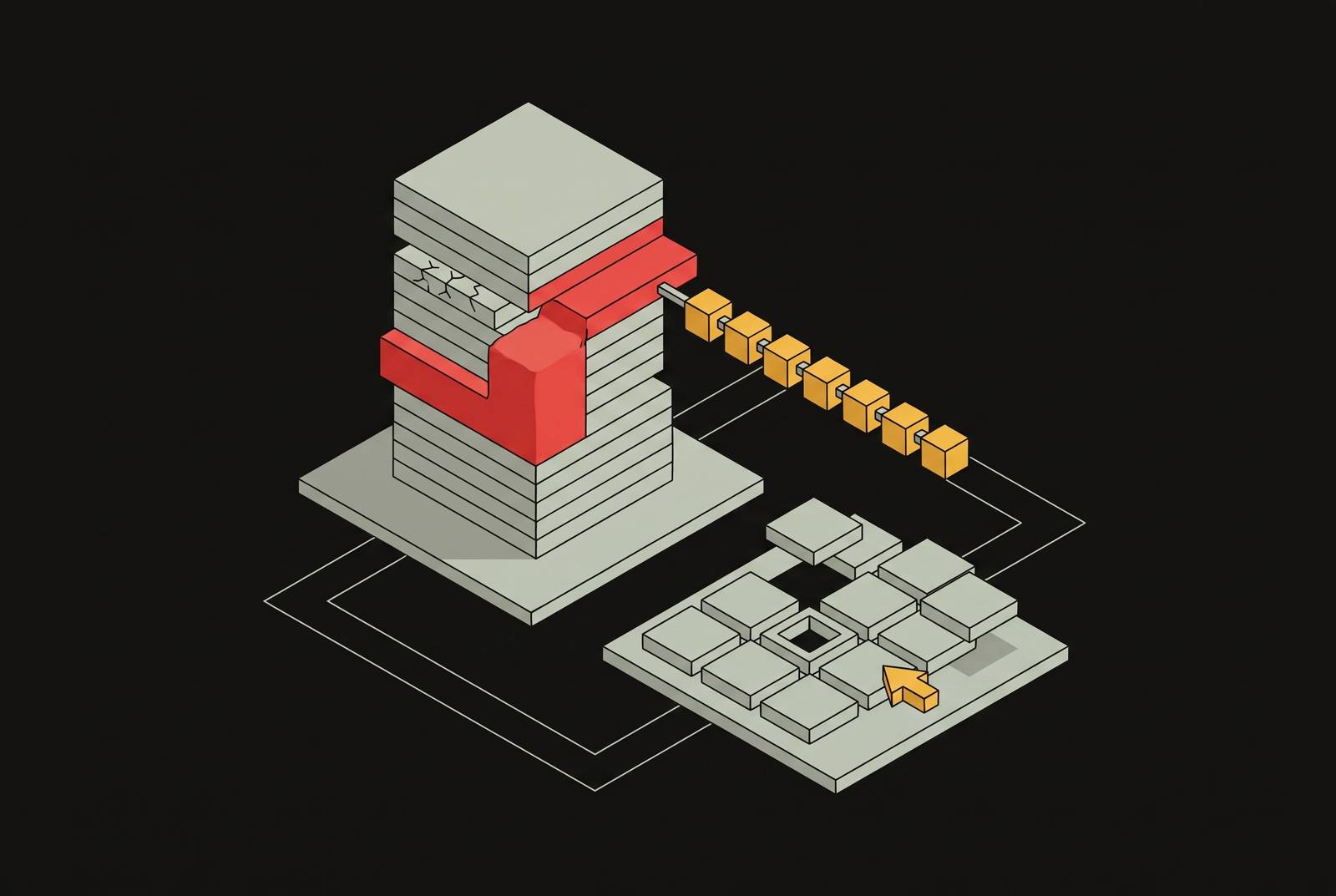
Modern Linux userland binary exploitation joins small capabilities into a working attack. Stack canaries, NX, ASLR, and control-flow defenses each block a different step. How those defenses work together explains why attackers reuse code, corrupt heap objects, abuse permissions, or change security decisions without redirecting execution.
Why modern Linux exploitation requires chaining, not a single trick
The popular picture is simple. Find a buffer overflow, inject shellcode, get a shell. On a modern hardened Linux system, that sequence no longer has the conditions it needs. Defenses can detect the overwrite, stop the injected code from running, or hide the addresses needed to redirect execution. A bug alone is not a working exploit.
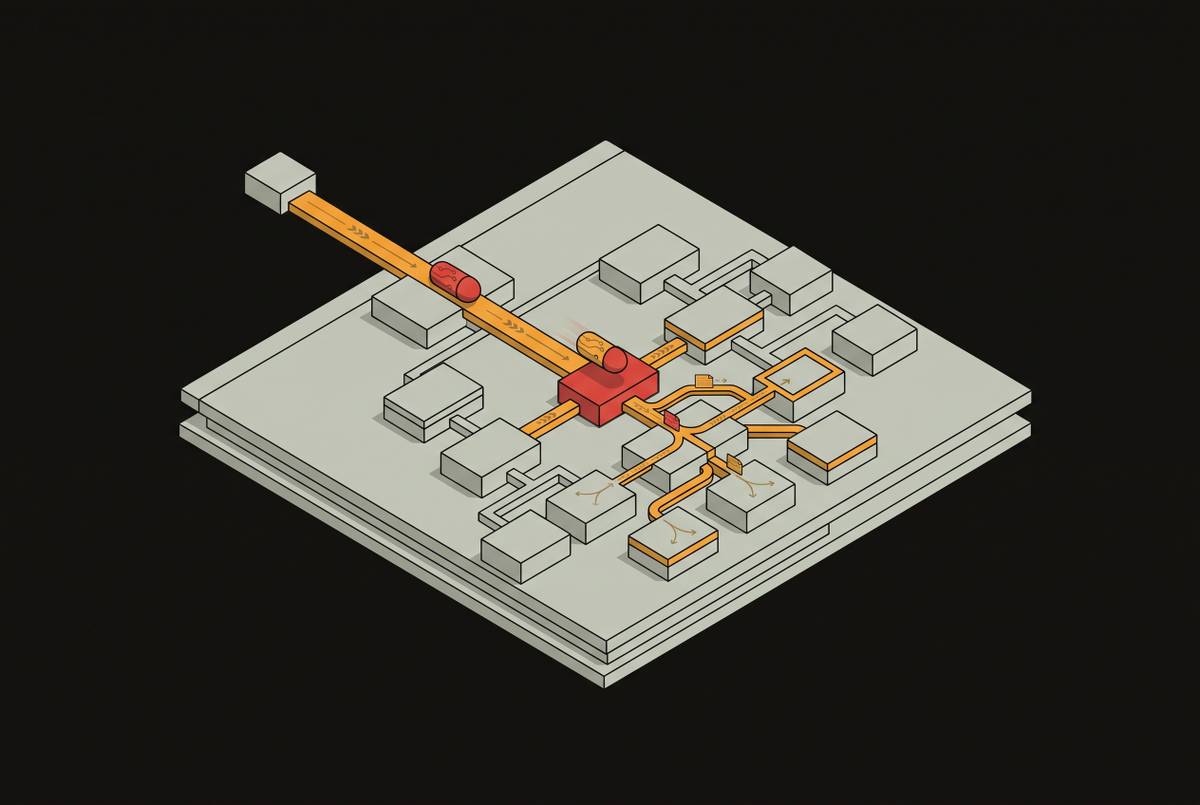
Instead, attackers assemble primitives, which are limited capabilities such as reading an address or writing to a chosen memory location. In a typical memory-corruption chain aimed at code execution, an information leak exposes the layout, a corruption primitive changes memory, and a control-flow hijack turns those changes into execution. Each step supplies something the next step needs. This structure grew as new defenses blocked older techniques, so exploitation became more elaborate because it had to.
The mitigation stack that shapes every technique covered here
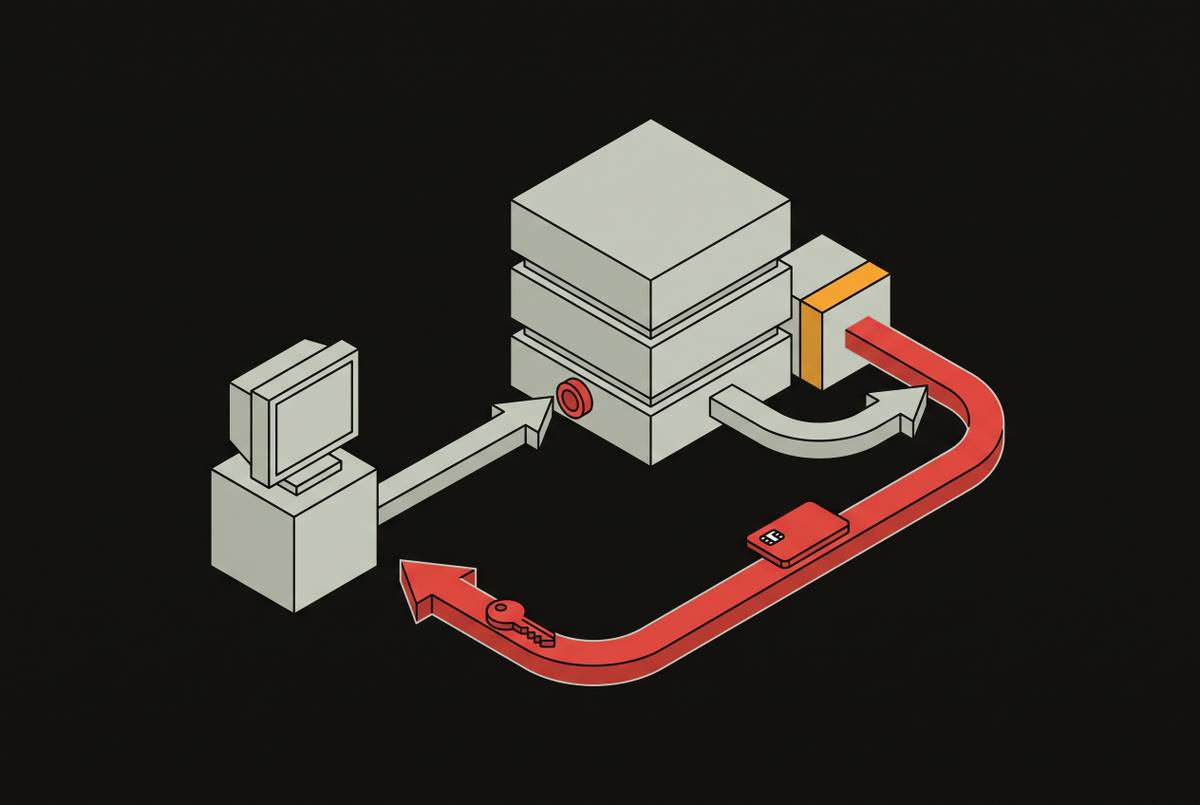
ASLR randomizes memory locations, so information leaks can undermine it by revealing addresses. Stack canaries protect a different boundary. A secret value sits between a local buffer and the saved return address, and the function checks it before returning. A linear overwrite that reaches the return address also damages the canary, triggering a fault. Leaking that value or avoiding the protected overwrite changes the problem.
NX/DEP marks stack and heap memory non-executable, blocking injected shellcode but leaving existing executable code available for reuse. Control-flow integrity, or CFI, constrains where execution can go. Intel CET adds a write-protected shadow stack that records return addresses on CALL and compares them with the normal stack on RET. A mismatch raises a control-protection fault. On 64-bit x86, Linux has support for user-space CET shadow stack and for kernel Indirect Branch Tracking, or IBT.
ARM's Guarded Control Stack, or GCS, provides a related defense on Armv9.3-A or later CPUs implementing FEAT_GCS. Linux 6.13 added support, but turning it on takes an explicit opt-in through prctl() or the dynamic linker. Availability is not the same as protection. A PIE binary gains no address-randomization benefit when ASLR is disabled, and CET needs glibc support to connect the pieces.
How ROP chains NX and ASLR together as a combined bypass problem
Return-oriented programming, or ROP, answers NX by reusing code. An attacker joins short instruction sequences called gadgets, each ending in RET, and manipulates the stack so returns connect them. For a basic 64-bit Linux execve chain, the register state supplies the mental model. The chain sets rax to syscall number 59, rdi to a pointer to /bin/sh, and rsi and rdx to NULL before reaching a syscall instruction. Register-loading gadgets provide the individual steps.
Finding those sequences is only half the problem. ROPgadget and ropper scan binaries and loaded libraries, but ASLR makes library base addresses unknown in advance. A libc address leak lets an attacker derive the base and calculate gadget addresses from their offsets. The leak defeats the address-hiding layer, while code reuse avoids NX. Neither capability supplies the whole chain alone.
CET's shadow stack attacks the link between those gadgets. Changing a saved return address on the normal stack creates a mismatch with the protected copy. Valid indirect-branch landing targets address IBT constraints while leaving that shadow-stack mismatch unresolved. A different route is therefore to seek execution through trusted heap or runtime structures without relying on a corrupted, CET-checked return.
The glibc heap as the primary exploitation surface after NX closed the stack
The heap gives attackers more than buffers to overwrite. It holds live objects and allocator metadata that software trusts when allocating, freeing, or using memory. As NX and CET close off simple stack-based execution paths, attackers have more reason to target these trusted structures. The corruption can change what the allocator does. That distinction explains the heap's central role.
Modern glibc still exposes several broad vulnerability classes, including linear overflows, function-pointer overwrites, Use-After-Free, or UAF, and tcache poisoning. A UAF leaves a pointer behind after an object is freed. If another allocation places attacker-controlled data in that slot, the old pointer now accesses the replacement. The stale reference supplies the opening.
Tcache, introduced in glibc 2.26, adds a fast allocation path with simpler checks than the main allocator. Corrupting its free-list pointers can turn allocation into a means of reaching a chosen address. Chunk-header corruption gives attackers another route by making the allocator carry out an attacker-directed write when it later processes the chunk. These are ways to build stronger primitives from constrained bugs. They can avoid the return-address manipulation that the shadow stack specifically detects.
How glibc 2.34's removal of malloc and free hooks forced the field toward FSOP
Before glibc 2.34, __free_hook and __malloc_hook offered writable function pointers on allocator paths. Replacing one with a system pointer or a one-gadget could provide a straightforward ending for a heap-corruption chain. The difficult work was obtaining the write. Once that capability existed, the hooks supplied a convenient route to execution. Their removal in glibc 2.34 closed that ending without removing the underlying corruption bugs.
File Stream Oriented Programming, or FSOP, became a major way forward because glibc's file-stream machinery still used trusted objects and indirect calls. The technique forges an _IO_FILE structure and arranges its fields and vtable relationships so later output or exit-time flushing reaches an attacker-controlled pointer. Acceptance of the forged object is the hinge. In this path, output through fputs ends up at a pointer in the wide-I/O machinery that the attacker can control. Like CET's pressure on ROP, hook removal pushed exploitation toward a different structure the runtime still trusted.
SUID misconfigurations as a persistent privilege-escalation path that mitigations largely miss
The SUID bit tells the kernel to execute a binary with the file owner's privileges. That serves legitimate needs, including allowing /usr/bin/passwd to update the protected shadow file. Applied to the wrong binary, however, the same mechanism gives an unprivileged user access to privileged behavior. No damaged return address is required.
Misconfigured SUID binaries can expose paths involving rootbash spawning, /etc/passwd injection, SUID-bit cloning, sudoers tampering, PATH hijacking, and editor abuse. These are permission failures. GTFOBins maps known SUID-capable binaries to exploitation paths, while LinPEAS and suid3num automate discovery on a host. ASLR, NX, canaries, and CET do not correct a permission grant that allows the dangerous action. The most dangerous combinations join these layers, using memory corruption to gain a foothold and SUID abuse to turn that foothold into greater privilege.
Data-only attacks gain control without touching any code pointer
Data-only attacks take a different route around control-flow defenses. They corrupt credentials, security flags, or configuration values. The program then follows legitimate execution paths but makes decisions based on data that has been changed. CFI protects where execution goes while leaving the trustworthiness of the values it reads unchecked. CET likewise has no mismatched return to catch.
The 2026 paper “DIRTYFREE: Simplified Data-Oriented Programming in the Linux Kernel” studies controllable data targets. Jakob Koschel et al.'s 2026 work “Discovering, characterizing and exploiting controllable-copy objects for kernel data-only attacks with CopyKat” extends that direction to copy-based corruption paths. These kernel examples broaden the discussion beyond userland.
This also limits the idea that every exploit needs a code-execution ending. Some chains need only a useful write and a security-relevant target. The absence of a corrupted code pointer is not evidence that an attack failed.
How the SLUB sheaf/barn mechanism in Linux 6.18 disrupts cross-cache assumptions and weakens freelist protections
Linux 6.18 added SLUB's sheaf/barn caching mechanism for I/O performance. Hao-Yu Yang and Yu-Ting Lin's 2026 research found that it changed what cross-cache attacks could assume and made existing freelist protections weaker. A new allocation path altered what attackers could build.
Their work, “Harvest Season for SLUB: From io_uring vulnerability to Novel Sheaf-Based Exploitation Techniques,” developed a complete local privilege-escalation chain against a hardened kernel configuration. It started from one of two previously unknown io_uring vulnerabilities. The research proposed three sheaf-based techniques, including a cross-cache exploitation technique. That technique removes the traditional dependence on the buddy system for moving objects across caches, allowing more flexible control over object migration.
Antonius's SheafJack demonstrated a related UAF technique for SLUB sheaves against Linux kernel 7.0 using CVE-2026-46215 in the drm driver. It shows that earlier protections cannot be assumed to cover new performance mechanisms. Hardening can advance in one part of the allocator while another change opens a route around it.
PrimSynth and the partial automation of primitive discovery
The complexity of these chains creates a reason to automate their building blocks. PrimSynth is a 2026 multi-agent LLM framework for discovering, validating, and synthesizing primitives from Linux kernel memory-corruption vulnerabilities. It was tested on 16 real-world Linux kernel CVEs, with a full primitive-match rate reported. That result concerns primitives, with automatic completion of every exploit chain outside its scope. The distinction is essential to understanding the claim.
PrimSynth gives validation and synthesis to separate specialized agents instead of asking one model to solve the whole problem. Its results show that some of the work can be automated while expert judgment is still needed. Primitive discovery has long taken months of manual work for each vulnerability, so cutting that work can shorten the time from disclosure to a usable chain. The whole attack need not be automated for the timeline to change. For defenders, complexity is therefore becoming a less reliable reason to assume that exploitation will remain distant when prioritizing patches.
What the full chain means for security assurance in cloud and SaaS environments
These techniques are relevant to SaaS infrastructure because an attacker does not need to write kernel code to exploit it. A compromised container process, vulnerable dependency, or misconfigured SUID binary can provide the foothold from which local privilege escalation begins. Kernel exploitation can then threaten isolation boundaries, including container and cloud-tenant boundaries. Userland and kernel risk are connected through that foothold. Assessing only the application misses part of the chain.
The lesson for assurance is to examine those connections through whitebox access to source code, cloud configurations, and dependency trees. That access helps find permission mistakes, vulnerable allocator paths, and exposed attack surfaces that a shallow assessment may miss. An assessment that finds no primitive is not, by itself, proof that none exists. A working-exploit-proven finding also establishes something an unverified scanner output does not.
Continuous pull-request scanning and expert-reviewed findings address the development-time surface, while retesting after remediation checks whether the fix closed the path. Annual point-in-time reviews alone cannot reliably track changes across applications, runtimes, permissions, and kernel allocators. Understanding how mitigations interact is the prerequisite for understanding these techniques, and for judging whether an assessment actually tested against them.