Using AI Models for Exploit Payload Generation and Variation
AI speeds payload variation, but only human judgment makes findings credible.
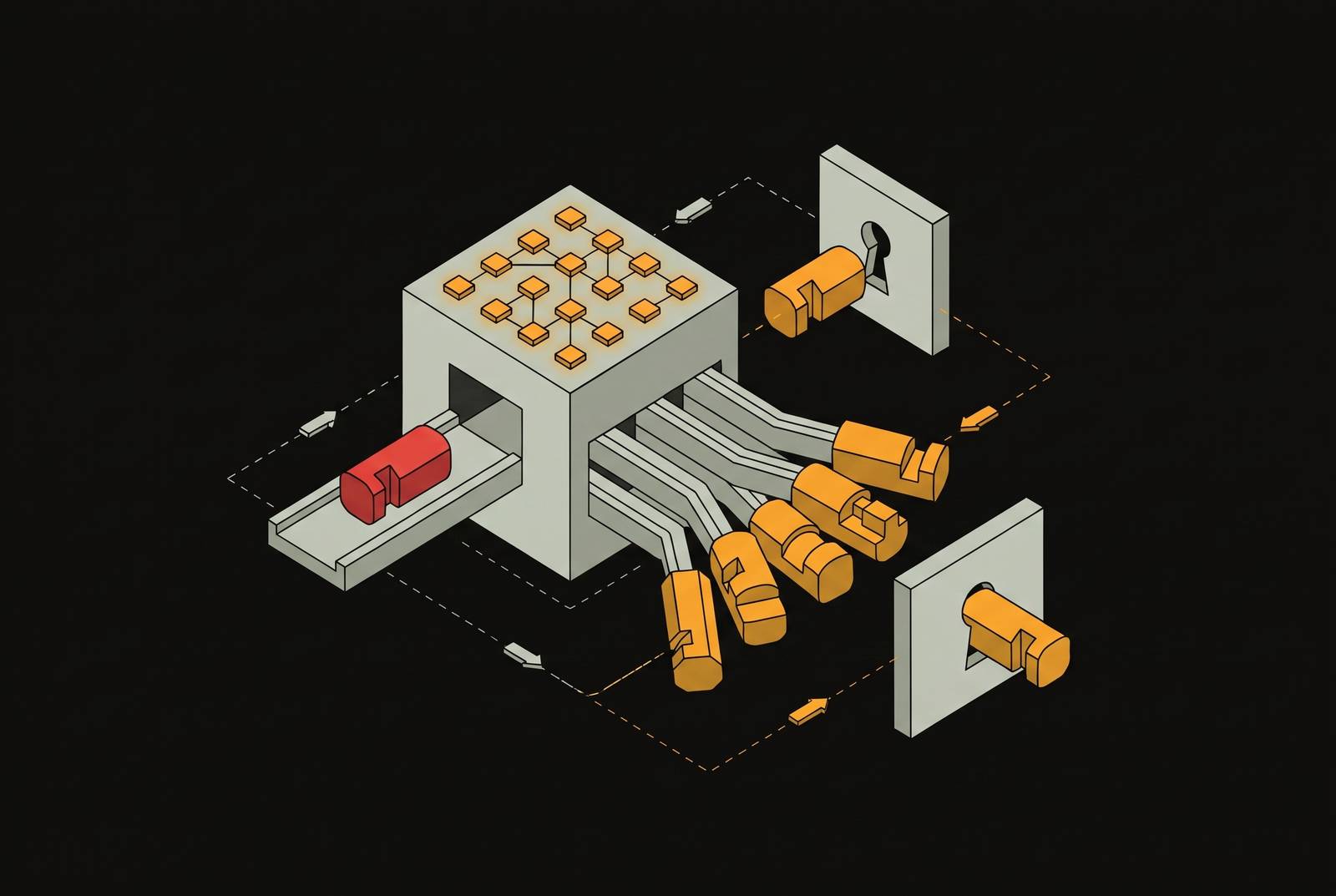
AI models can help make and vary exploit payloads during authorized security tests. They can handle the mechanical work faster than a practitioner working alone, but speed is not proof. A credible finding still depends on a human expert deciding what the payload actually demonstrated, whether the test stayed within scope, and what the result means for the organization.
What AI payload generation actually is and why 2026 is the inflection point
AI payload generation means using large language models to draft, mutate, and tune test inputs such as SQL injection strings, XSS variants, WAF-evasion sequences, and reverse-shell commands. It does not mean handing a model a target and expecting novel zero-days. The useful role is narrower than that. An operator identifies a vulnerability class, supplies test context or disassembly output, and describes the target’s constraints. The model then helps refine candidate payloads.
The gain comes from throughput and breadth of variation. A model can draw on public exploit material and keep producing alternatives without tiring, while the operator decides which alternatives fit the engagement. One practitioner’s eight-month engagement dataset described finding more vulnerabilities within the same testing window. In a concrete case, AI-assisted JavaScript analysis surfaced hidden API endpoints that manual review missed, including one that exposed a significant IDOR vulnerability.
By 2026, the practical distinction is between tools that widen discovery and tools that help reason through exploitation, jobs with different evidence requirements. Nuclei with AI-generated templates and Semgrep help identify known vulnerability classes at scale. PentestGPT helps work out how findings might link up into attack paths. That split gives the workflow its shape.
How the workflow actually runs from reconnaissance through exploitation
The operator defines scope before the model proposes targets or payloads. During reconnaissance, AI-assisted pipelines can turn raw Nmap output into prioritized, annotated views of the attack surface. This leaves less analysis to do by hand on well-documented targets, but obscure legacy systems and custom internal protocols are still harder to work with. Subdomain analysis offers another useful entry point. In one documented case, patterns in names helped uncover a forgotten Jenkins instance with default credentials.
Once an injection point is identified, the model needs more than a vulnerability label. The operator provides the backend technology, the exact input location, and the observed behavior of the web application firewall. The model can then generate targeted evasion candidates. It may suggest an approach the operator had not considered. The operator still chooses the target, reads the response, and confirms whether the filter was bypassed.
The DEG-WAF framework reported bypass rates as high as 97.8% for certain attack classes against production-representative WAFs in testing. Its design pairs an LLM payload generator with reinforcement learning. That result supports the case for automated variation, but bypass is not the same as exploitation. A request getting through a filter does not establish that it caused security impact.
Binary work follows the same division of labor. An operator can supply GDB disassembly and checksec results, including NX, ASLR, and stack canary status, to support refinement of ROP chains or shellcode placement. Source analysis broadens the workflow further by surfacing hardcoded credentials, undocumented endpoints, client-side authorization checks, and dangerous function usage across large JavaScript codebases. Generated code from either workflow still needs to be checked for safety. Operators must understand what they execute.
What the benchmark evidence actually says about AI exploitation capability — and where it breaks down
CVE-Bench tests agents against 40 critical-severity CVEs in settings built to work like those in the real world. It reports state-of-the-art performance dropping to 13%. The gap from curated tasks is substantial. Published results show what models can do, but a score from a tidy test environment cannot show how well they will work against messy infrastructure.
Model rankings also depend on the task being measured. No single model leads all six distinct tasks that constitute a penetration test, so choosing by one headline score can waste money and weaken results. Claude Fable 5.1 leads on repository-scale source review. Anthropic permits vulnerability discovery in source code at general availability for that model, while prohibiting exploit development. Capability and permitted use are separate questions.
OpenAI released GPT-5.6-Cyber on August 10, 2026, with additional training for exploit development, advanced vulnerability research, zero-day discovery, and exploit-chain construction. Access is through Daybreak Red for offensive work that has been explicitly authorized. OpenAI’s evaluations show improvements on several specialized exploitation tasks, while GPT-5.6 Sol performs better in at least one open-ended vulnerability-discovery and report-writing evaluation. Claude Mythos 5.1 has the highest published exploit-development scores and is available only through Anthropic’s Cyber Verification Program, with no general availability. There is no universal winner here.
OpenAI’s Advanced Cybersecurity Completion Rate measures whether a model completes advanced requests. The evidence ladder has four distinct levels. A model can answer a request, produce a proof of concept, trigger the vulnerable state, or demonstrate controlled security impact under realistic mitigations. Each level needs more evidence than the one before it. Code that looks right but crashes the wrong path never reaches the final level.
The two structural failure modes that benchmark scores cannot capture
The first failure mode is hallucination presented as a finding. A model can mistake an interesting response for a successful exploit, especially when a payload gets past a filter. One practitioner-documented case involved an AI-suggested exploit that named the right CVE and had reasonable syntax, yet was fabricated. The CVE either did not apply to the target or the payload assumed a code path absent from the binary. Its fluency made the error harder to spot.
That error becomes more damaging in a report. A plausible but unproven claim can make a client believe a security boundary has been tested when it has not. It is a false account of what the engagement established, which can divert attention from the organization’s actual exposure.
The second failure mode is benchmark scores that shift with the scaffolding around the model. The orchestration layer around a model affects how well it does, yet major benchmarks overlook how much that layer adds. Rankings also shift across datasets and tasks. A team can select a model using published scores, change the framework around it, and get very different performance without changing the model itself.
Why the defensive side of this equation has collapsed the time window for finding things first
M-Trends 2026 reported an estimated mean time-to-exploit of –7 days, meaning vulnerabilities were being exploited before a patch was available. That leaves less time for a slow testing cycle. The figure alone cannot show that AI caused the change in timing. Microsoft Threat Intelligence nevertheless confirms that threat actors use LLMs to investigate publicly disclosed vulnerabilities and possible exploitation methods, putting the same research assistance available to defenders into attacker workflows.
Sysdig’s Threat Research Team documented VAPT in June 2026, a custom exploitation framework using a hijacked Ollama server as its reasoning engine. It turns plain-language descriptions of vulnerabilities into machine-readable exploit recipes. In May 2026, the same team disclosed an autonomous-agent intrusion that chained CVE-2026-39987, a Marimo notebook RCE, through AWS Secrets Manager to an internal PostgreSQL database. Four automated pivots completed a database dump in under two minutes.
The testing toolchain is also a target. CVE-2026-42271, a high-severity command injection vulnerability with a CVSS score of 8.7 in LiteLLM, can be chained with CVE-2026-48710, a Starlette host-header authentication bypass, to achieve unauthenticated remote code execution. Adopting AI tooling therefore adds infrastructure that needs scrutiny of its own. Faster testing cannot compensate for an exposed system running the tests.
The dual-use accountability problem and why governance is now operational, not theoretical
Authorized testers and attackers draw on a shared pool of capabilities. The same payload generator can support either, and a model cannot establish permission merely by being technically capable of a task. Authorization is the dividing line between legitimate and illegitimate use. The organization must use controls on scope and evidence to establish the permission the tool cannot.
Guardrails do not remove that responsibility. Research demonstrates that character injection and imperceptible adversarial techniques can evade prompt injection guardrails while leaving the underlying prompt functional. Indirect prompt injection adds a further trust problem because hostile instructions can sit inside web pages, documents, emails, or database output an agent processes. Data can become an attempted instruction.
The OWASP LLM Top 10 moved excessive agency from sixth to third place in 2026, drawing attention to autonomous action without clear enough limits on what is authorized. The EU AI Act took full effect in August 2026, making requirements such as model evaluation and incident reporting enforceable. NIST AI 800-1 addresses misuse risk for dual-use foundation models through voluntary best practices, while the 2026 Singapore Consensus sets out principles including least privilege, auditability, interruptibility, and human oversight. These instruments have different legal weight, but putting a tool to use responsibly takes both a tool choice and clear limits on what has been approved.
What human expert review contributes that AI cannot replicate at the finding stage
At the finding stage, the expert decides what the evidence actually proves. That includes whether attacker-controlled input reaches the affected function, whether a proposed chain survives realistic mitigations, and whether the result changes the organization’s risk. Those questions require contextual interpretation and a person accountable for the authorization and conclusion.
Whitebox access gives that judgment a firmer basis. Source code, cloud configurations, and product documentation help a reviewer distinguish filter evasion from exploitability in the actual system. Surface responses alone are less reliable. A blackbox model may spot a pattern it has seen before without knowing whether the code path it needs is there or can be reached.
Human approval also governs how far validation can go. AI can automate discovery and low-risk validation, but authorization bypass, privilege escalation on production systems, and irreversible state changes require an approval boundary. The test’s potential consequence changes the decision. A promising candidate is not permission to continue through every suggested step.
For reports presented to auditors or customers, review becomes attestation. The responsible model has a human expert sign off on every finding before it enters a report, including outputs intended for SOC 2, HIPAA, and ISO 27001 contexts. Certification such as OSCP or an equivalent supports that review role. The report’s credibility rests on the evidence and accountable expert assessment.
How to integrate AI payload tooling into an authorized engagement without compromising the finding’s credibility
The practical rule is to separate candidate generation from decisions that require proof or permission. Use AI to prioritize reconnaissance output, correlate service fingerprints, and suggest targets for human attention. Confirm those targets before engaging them. Use payload variation to widen testing, but let the operator interpret application responses and establish impact. Review AI-generated Nuclei templates and Semgrep rules before putting them into production use.
For exploitation, require evidence at each step rather than accepting the model’s narrative of a complete attack path. Validate every pivot independently under realistic conditions. A chain fails if one necessary step does not hold. Before authorization bypass, privilege escalation, data exfiltration, or other actions affecting production state, confirm scope and obtain human approval. Never execute generated exploit code without understanding it, because subtle bugs and unsafe patterns can harm the target environment.
Choose models for the work they will perform. Models such as Fable 5.1 suit large-context source review, while GPT-5.6 Sol suits long agent loops and GPT-5.6-Cyber is available through Daybreak Red for exploit development that has been explicitly authorized. Access terms remain part of that choice. Report formatting can go to cost-efficient models rather than consuming an exploit-development budget without a quality benefit.
With continuous pull-request scanning, this approach can run beyond the annual point-in-time tests. AI variation can run as the codebase changes, surfacing candidates and new attack surface for review. The approval structure does not need to disappear for coverage to expand. Human experts determine what gets escalated, reported, and acted on, while the model does more of the repetitive work that makes those decisions possible.