LLM-Augmented Fuzzing for Web Application Endpoints
LLMs help fuzzers break past input validation by supplying valid requests and ordered sequences.
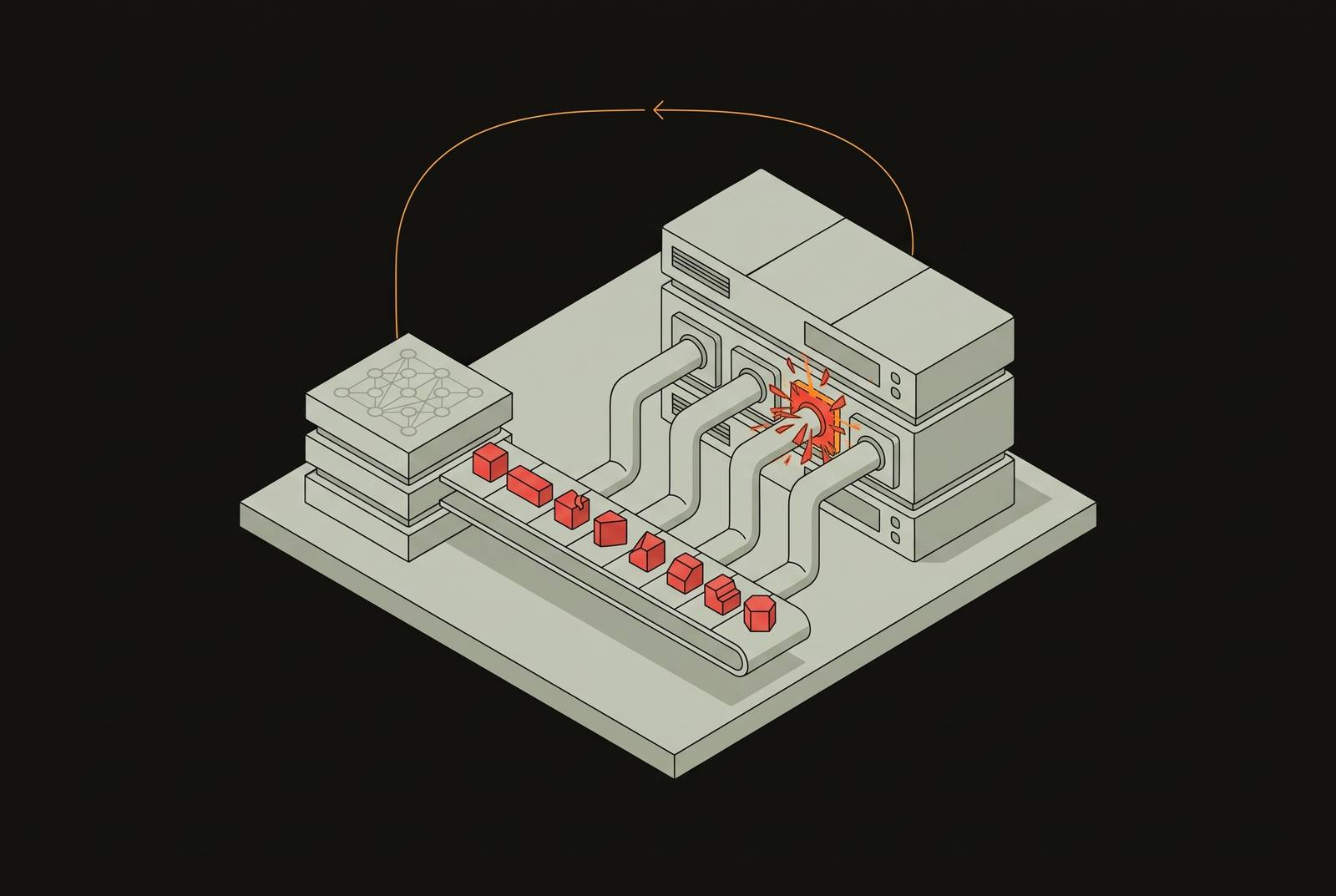
LLM-augmented fuzzing helps web application security tests get past input validation and into application logic. Its strongest use is not replacing classical fuzzers, but giving them valid starting inputs, ordered request sequences, and corrections drawn from API responses. Splitting the work this way makes testing more thorough, but experts still need to check which flaws are exploitable and which are mistakes that look convincing.
Why traditional fuzzers stall at the web API boundary
A byte-level mutation can break a JSON token or an HTTP header before a request reaches the code under test. Tools such as AFL++ and libFuzzer mutate raw bytes, but web endpoints expect structured inputs with rules that extend beyond their format. Rejected inputs mostly exercise the parser or validator. They do not test the application logic beneath it.
LLAMAFUZZ’s authors identify complex constraints on structured seeds as the bottleneck. Grammar-based fuzzers help by making inputs from hand-written rules, but getting the structure right does not tell them about authentication state, business logic, or how requests depend on one another. A schema-valid request can still refer to a resource that does not exist. The barrier is therefore not simply malformed data, but data that has no valid meaning in the application’s current state.
What "semantic validity" actually requires for web API inputs
A useful web API input must satisfy syntax, meaning, and state at the same time. JSON must be well-formed, required headers must be present, and schema fields must have the right types. That is only the first layer of validity. A user ID must be plausible, a date range must be internally consistent, and an enum must contain an allowed value. A grammar can describe the structure without including those domain rules.
A sequence may need POST /users before GET /users/{id}, because the later request consumes a resource created by the earlier one. PDFuzzer studies an analogous problem in JavaScript API sequences inside PDF readers. It distinguishes producer-consumer relationships from value-constraint relationships, where calls require the same parameter value, and implicit relationships, where earlier calls change shared state. For web APIs, that distinction explains why putting requests in the right order is not enough. Their values must agree, and the state established by earlier requests must support the later ones.
How LLMs supply the semantic understanding fuzzers lack
LLMs use what they have learned from code, documentation, and natural language to make inputs. Their training includes patterns in JSON schemas, HTTP specifications, and REST conventions, which lets them propose plausible inputs without a hand-written grammar for every target. Documentation adds details about the application that general training lacks. A parameter description can explain not just its type, but what it represents and which earlier operation supplies it.
LLAMAFUZZ uses what it learned in pre-training about data conversion and formats to make valid inputs, then fine-tunes on paired mutation seeds to learn how to carry out structured mutation. PDFuzzer uses an LLM to construct context-free grammars and infer relationships between API calls from manuals and execution traces. These are different uses of the same capability. The model turns descriptions and examples into constraints that guide input generation. The pipeline starts with inputs based on the API’s conventions, so random mutation has less to discover, though the rules it infers still need to be tested against the target.
Seed synthesis as the highest-leverage intervention point
SeedSmith places the intervention at the initial seed corpus, the starting inputs that a fuzzer will mutate. Its central argument is that a seed which follows the right control-flow path and satisfies key crash preconditions changes the remaining task. The fuzzer can refine a useful input locally. It no longer has to discover every prerequisite through blind exploration.
To construct those seeds, SeedSmith starts from a target sink, explores the codebase, resolves indirect calls, and identifies the conditions needed to trigger a crash. It then synthesizes concrete inputs that satisfy those conditions and hands them to a downstream mutation-based fuzzer. The seeds work with AFL++ and AFLGo without changes to either tool to tell it where they came from.
This separation also avoids putting model inference on every mutation. Token cost and inference latency make that an impractical way to sustain a campaign. The LLM does the slower work of building promising starting points, while the classical fuzzer does the fast mutation and coverage-guided exploration.
Dependency-aware request chaining for stateful REST APIs
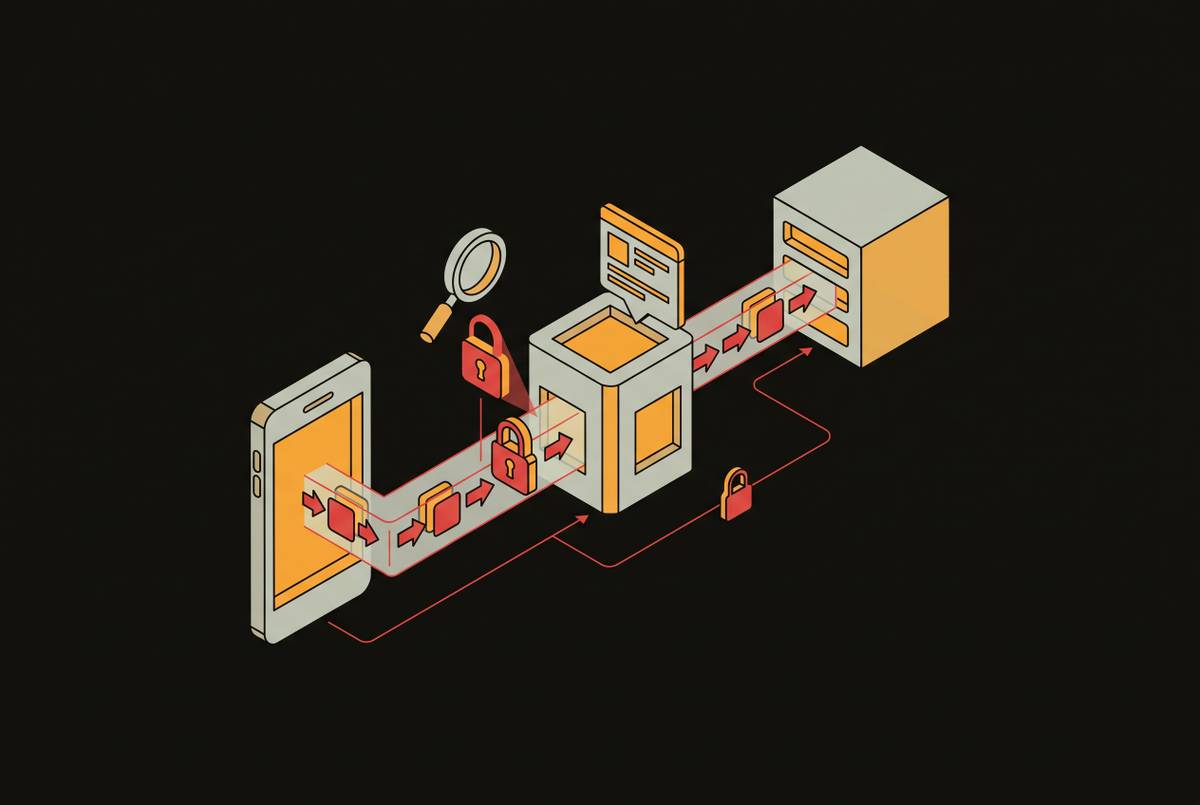
For stateful REST APIs, a useful starting point may be a sequence of requests. A resource must exist before it can be retrieved, updated, or deleted, and authenticated operations require an established session. A request on its own cannot create the history it needs. If the fuzzer ignores that history, it may repeatedly receive 404s or fail to exercise operations in a realistic state.
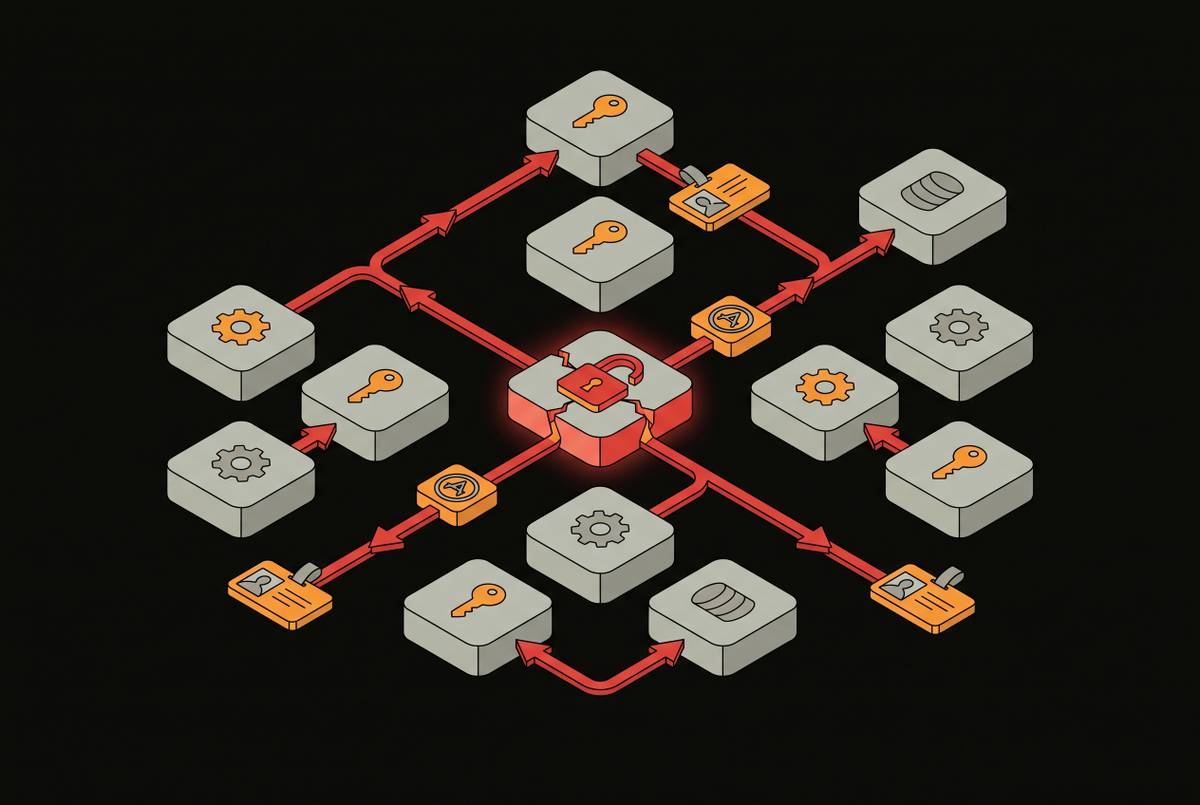
LLMs can infer ordering and value dependencies from OpenAPI specifications and natural-language documentation. Those dependencies form a graph from which the system can construct request chains, with earlier outputs supplying later inputs. ChainFuzzer studies a structurally similar problem in LLM agent tool chains. Its source-to-sink analysis concerns attacker-influenced data that becomes exploitable only when tools are composed.
The REST connection is an analogy. Both settings require following data through multiple steps and accounting for shared state. For API testing, this means a valid endpoint input is not always the right unit of exploration. The relevant unit may be the whole chain that delivers attacker-influenced data to application logic.
Feedback-driven refinement: using API error responses to improve inputs
An API rejection can contain instructions for getting further. A 422 Unprocessable Entity response or schema validation error may say which field or value failed. Byte-level mutation alone cannot make sense of that explanation. An LLM can use it as context for generating a corrected input, turning rejection into guidance.
A grammar produces inputs from its existing rules, while error-driven refinement can adjust an input based on what the running application says it expects. PDFuzzer applies a related principle during corpus construction by using execution traces as well as documentation. Runtime behavior informs its model of API relationships instead of leaving static specifications as the only source of truth.
As corrected requests pass validation, later responses can show what the application needs that earlier schema errors kept out of view. The feedback therefore becomes more specific as testing reaches deeper logic. This is a mechanism for revising assumptions against the actual target.
Which vulnerability classes this approach reaches that traditional fuzzing misses
Semantically valid inputs can reach security checks that malformed requests never exercise. SQL injection and XSS tests may need payloads that look legitimate to validators but exploit differences in how deeper query or rendering logic interprets them. SSRF testing has a similar prerequisite. A URL parameter must pass format checks before it can reach the application’s HTTP client, where an outbound request becomes possible.
Broken Object-Level Authorization, or BOLA, involves a request that is acceptable in form and state but unauthorized for the requested object. The resource ID format, session token, and HTTP method must be valid enough to reach the authorization decision. A parser rejection says nothing about that decision. Testing must distinguish “the request was understood” from “the caller was entitled to perform it.”
GraphQL presents another structured surface, where schema-aware generation can exercise nested resolvers and complex type relationships that naive mutation struggles to reach. A penetration test needs to show behavior that can be exploited, including unauthorized access and data exfiltration. Semantic input generation makes those paths more accessible, but reaching them is not itself proof of a vulnerability.
The hallucination problem: where LLM-augmented fuzzing currently breaks down
An LLM can generate a convincing input based on an invented API relationship or an incorrect parameter constraint. Plausibility is not the same as correctness here. Reported failures include inputs that repeat, programs that stop early, mistakes about the conditions needed for a vulnerability, and test sequences that take the wrong paths. Those errors can leave paths untested even when the generated test corpus looks large.
LibLMFuzz found that 75.52% of its synthesized fuzz drivers were nominally correct on first execution in its evaluation of black-box libraries. That result leaves a meaningful repair burden even before moving to complex authenticated web APIs. It also measures driver correctness. A system cannot turn a working driver into a security finding merely by generating a persuasive explanation.
Context limits add another source of incompleteness. The model’s context has too little room to hold a whole large OpenAPI specification, every past request-response pair, and the current fuzzing state at once. The pipeline must trade breadth against detail, which can weaken its dependency model. These engineering limitations require management and scrutiny of generated tests and findings.
How hybrid pipelines and human review compensate for LLM limitations
A hybrid pipeline checks what the model produces before drawing conclusions about security. LLM-generated seeds feed classical fuzzers, coverage analysis identifies what execution reached, and targeted re-prompting directs further generation. Each component has a narrower job to perform. The model proposes semantically informed inputs, while the fuzzer supplies throughput and execution-based feedback rather than relying on the model’s account of what should happen.
LLAMAFUZZ implements this separation through asynchronous traditional fuzzing and LLM-enhanced mutation, using a job queue to supply structured mutations without making the fuzzer wait on every model response. SeedSmith’s iterative code exploration lets later seed-generation decisions use information gathered earlier, rather than demanding a complete answer from one prompt. Iteration provides opportunities to repair mistaken assumptions before they shape the whole campaign.
Human review addresses a different failure mode at the finding stage. Automated discovery finds possible flaws, but experts must judge whether they can be exploited and what their business impact would be. A certified expert must review and sign off on findings before they are treated as confirmed vulnerabilities. This is especially important when an apparently successful test may have exercised the wrong path. Audit-ready evidence depends on what the target demonstrably did.
What LLM-augmented fuzzing means for web application penetration testing practice
For engineering leaders and security buyers, this approach changes how testing breadth should be evaluated. In a whitebox engagement, source code, API documentation, and cloud configurations give the testing pipeline context for mapping endpoint dependencies before fuzzing begins. That gives experts more to start with than if they built every input and sequence by hand. Their time can shift toward exploitability, business impact, and ambiguous behavior.
The same seed-synthesis and refinement loop can run against pull requests in CI/CD. It can flag changes that introduce endpoints or alter parameter handling so that previously valid inputs stop working. Continuous testing does not settle remediation, however. Automated patch generation remains an open challenge, and discovering a flaw automatically does not establish that a proposed fix is safe or correct.
The lesson for evaluating a penetration test is to examine reach and confirmation alongside the finding count. A report with no findings is more credible when its methodology includes semantic-aware fuzzing across all documented endpoints. That breadth still needs evidence that generated sequences reached the intended logic. The practical standard is LLM-assisted generation for semantic reach, classical coverage-guided fuzzing for sustained exploration, and certified human expert review to confirm exploitability and sign off on findings.
Sources
- SeedSmith: LLM-Driven Seed Synthesis for Directed Fuzzing
- ChainFuzzer: Greybox Fuzzing for Workflow-Level Multi-Tool Vulnerabilities in LLM Agents
- From Documentation to Zero-day Vulnerabilities: LLM-Driven Fuzzing of JavaScript Engines in PDF Readers
- LLAMAFUZZ: Large Language Model Enhanced Greybox Fuzzing
- LibLMFuzz: LLM-Augmented Fuzz Target Generation for Black-box Libraries