Demonstrating Business Impact Through Data Exfiltration Proof
Shows what attackers could actually steal from your systems, not just theoretical vulnerabilities.
Most penetration tests end the same way: a PDF lands in someone's inbox with a list of findings, each ranked by CVSS score. That score tells a reader how exploitable a flaw is and what it could do to confidentiality, integrity, or availability, in the abstract. It never tells anyone the one thing they actually need to know, which is what an attacker would walk away with from that specific company, on that specific day.
The gap breaks down differently depending on who's reading. An engineer staring at "Critical, 9.8" has one real question: does this actually work against our systems, or is it a theoretical score spat out by a scanner that's never touched our environment? An executive reading the same number wants to know what it costs, in dollars, in customers, in regulatory exposure. A number alone answers neither question, and it was never built to.
So the finding sits in a backlog next to feature requests and bug fixes. Nobody can point to what leaving it alone would actually cost, so it loses that fight almost every time. Velocity wins, security waits, and the pattern holds until something forces the issue. That something is usually a breach that makes the theoretical concrete in the worst possible way.
What data exfiltration proof is
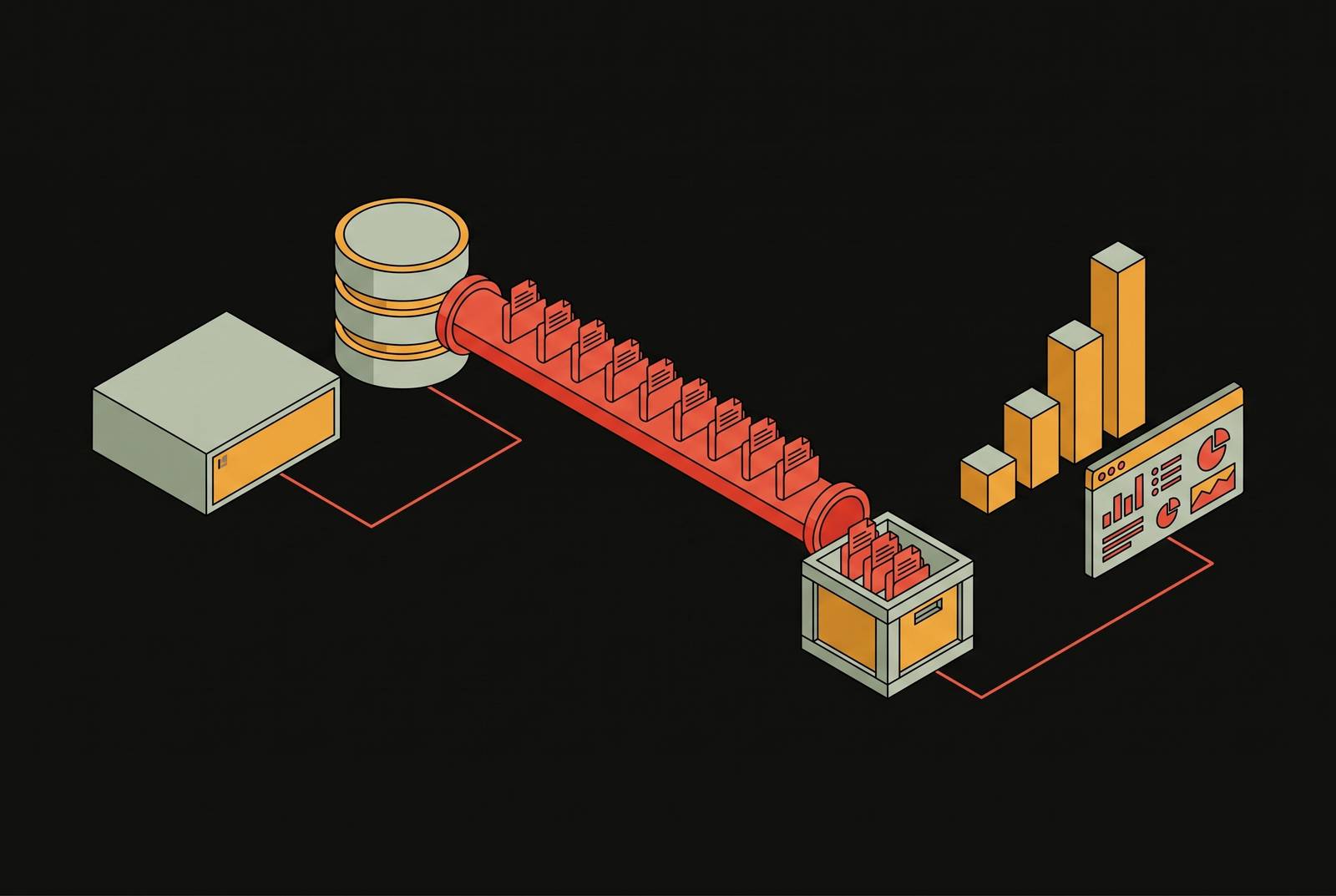
Exfiltration proof is a working artifact produced during a test that shows an attacker didn't just reach sensitive data, but could pull it out. It is a demonstration that data was accessed and pulled out, not merely a claim that data "could potentially" be accessed under the right conditions. It is a demonstration, with something to show for it.
The form that artifact takes depends on the flaw. It might be a sample file pulled from a production-equivalent data store during the engagement, or a captured credential set paired with a walkthrough of what access those credentials unlock. Sometimes it's a session token lifted through cross-site scripting, replayed to show what the attacker's browser session would have actually displayed. Other times it's cloud IAM credentials harvested through server-side request forgery, backed by a log of the metadata service's response and a demonstration of how far an attacker could move laterally with them. With SQL injection, it's an excerpt from a database dump proving the attacker reached real customer records.
Most reports quietly cheat on this point, so the negative definition matters as much as the positive one. A scanner flagging a parameter as "possibly injectable" is not exfiltration proof. A bare CVSS score with no exploit walkthrough behind it isn't either, and neither is a screenshot of an error message that merely suggests something might be wrong. An attack chain sketched on a whiteboard but never actually run doesn't count, no matter how plausible it sounded in the meeting where someone drew it.
This is where exfiltration proof splits from a standard proof-of-concept, and the distinction is not cosmetic. A PoC proves a vulnerability can be triggered, full stop. Exfiltration proof proves something harder: that whatever the business actually cares about, customer records, payment data, credentials, was reachable and could be moved out the door.
Exfiltration proof mapped to the vulnerability classes most likely to expose SaaS customer data
SQL injection is the clearest case, and the one every SaaS team should treat as non-negotiable. It ranked third on the 2024 CWE Top 25, and it's the class of flaw behind the MOVEit mass-exfiltration incident, one of the more consequential breaches of the past few years. Exfiltration proof for a SQL injection finding looks like a retrieved row or a column dump, not an error banner flashing on screen. Without an artifact, a report says "input is not parameterized." With one, it says "we retrieved 50 rows of your customer table in 4 seconds". Those two sentences do not move a reader the same way, and pretending otherwise is how findings die in a backlog.
Server-side request forgery aimed at cloud metadata services deserves its own line item, because the risk stopped being theoretical years ago. Metadata endpoints like AWS's 169.254.169.254 and GCP's metadata.google.internal hand back IAM credentials and instance secrets to whoever asks correctly. CVE-2025-51591, a Pandoc vulnerability scored at CVSS 6.5, was exploited in the wild through iframe injection to reach AWS's instance metadata service. CVE-2025-53767, an Azure OpenAI elevation-of-privilege flaw, scored a full 10.0 and was reachable via SSRF. F5 Labs tracked a campaign in March 2025 targeting EC2 instance metadata through this exact technique. Exfiltration proof here means the raw metadata response itself, showing live credentials, plus a demonstration of what those credentials actually permit inside the environment. A CVSS 6.5 sitting alone on a page is easy to shrug off, but the same 6.5 with a metadata response stapled to it reads like a different vulnerability entirely.
Cross-site scripting gets lumped together too often. That grouping is a mistake. Stored XSS sits in the database and fires against every user who loads the affected page, which is a fundamentally different animal from a one-off reflected XSS that needs a victim to click a crafted link. More than 30,000 CVEs are logged across injection and XSS combined, so raw frequency tells a reader almost nothing about severity. What separates a nuisance finding from a genuine incident is the artifact: a captured session token, replayed to show what the attacker's session would have exposed inside a real victim account.
Insecure deserialization and hardcoded secrets round out the list, and each produces its own kind of proof. Deserialization exfiltration proof tends to look like remote code execution output that reaches an actual data store, while hardcoded secrets appear as a working API call or a live database connection built straight from the exposed credential. Different mechanism, same underlying question every time: did this get someone somewhere they shouldn't have gone?
Exfiltration proof and its effect on the remediation conversation inside engineering teams
Without an artifact, a finding is just a score competing against everything else on an engineering team's plate, feature work, bug fixes, other tickets, and it usually loses https://www.bachao.ai/pentesting-guide. Priority goes to whatever's easiest to defend in a sprint planning meeting, and "Critical, CVSS 9.8" rarely wins that argument on its own https://www.bachao.ai/pentesting-guide.
An artifact changes the math. "We pulled your payments table" is much harder to defer than "SQL injection, Critical". It makes the blast radius real instead of theoretical, and it answers the question every engineer is quietly asking anyway: would this actually work against our specific setup? That single answer removes a whole layer of internal debate that would otherwise eat weeks.
Chained exploits benefit even more from this treatment, maybe the most of any category. A misconfiguration rated medium severity, sitting next to an SSRF finding rated low, gets waved off individually almost every time. Chain them together into something that yields live cloud credentials, though, and the combined artifact stops being easy to dismiss. Scanners rarely catch these chains at all, because each half looks harmless sitting by itself.
Retesting benefits too. Once a fix ships, the same artifact becomes the baseline: either the retrieval attempt fails now, or it doesn't. No ambiguity, no argument about whether the patch held. Where pull-request scanning runs continuously, a reintroduced injection pattern gets flagged before it reaches production, with the original artifact defining what a regression looks like.
Exfiltration proof as a communicator of business impact to executives and auditors
Executives have to take a CVSS 9.8 on faith. The number doesn't explain itself, so someone in the room has to translate it into stakes anyone actually cares about. An artifact skips that translation step. "We retrieved a file that maps to your customer PII schema" needs no interpreter.
Once the artifact exists, the business conversation opens in a few directions. There's the regulatory angle, which data classification got touched and what breach notification duty that triggers. There's the customer trust angle, since the exposed data type may require disclosure, and disclosure moves churn. There's the financial angle too, where the average cost of a U.S. data breach has reached $10.22 million, a figure that stops being an abstract statistic the moment a real breach path is attached to it https://deepstrike.io/blog/penetration-testing-for-compliance https://deepstrike.io/blog/glba-penetration-testing.
Auditors read these documents differently than executives do, but the artifact still carries the weight. SOC 2 auditors checking evidence against CC4.1 aren't hunting for a list of findings. They want proof that controls were tested under conditions resembling a real attack, and proof the organization did something once it found problems. Pairing an exfiltration artifact with a remediation record and a retest result beats a bare score every single time. ISO 27001's Annex A 8.8 and 8.29 both call for documented testing, with 8.29 covering testing during development and acceptance and 8.8 covering remediation of operational vulnerabilities, and the artifact is what actually fills that documentation requirement. HIPAA's current Security Rule already requires ongoing risk analysis, and the proposed update from HHS would make annual penetration testing an explicit requirement. Organizations already sitting on exfiltration-level evidence are ahead of that curve no matter when the rule finalizes. Enterprise buyers running vendor security reviews increasingly ask for a recent third-party penetration test as part of the deal too, and an executive summary built around real exploits and retrieved data lands harder than one built around scores alone.
The engagement model required to produce exfiltration proof reliably
Testing an environment purely as an outside, opportunistic attacker has its place. It's a reasonable way to simulate someone poking around from the internet with zero inside knowledge. But it cannot answer the harder, more useful question: what could someone who already understands the architecture actually walk away with? A blackbox-only engagement will always undersell the real risk, because the tester spends most of the clock finding the door instead of proving what's behind it.
Getting past that limit requires whitebox access, and there's no real substitute for it, no matter how good the tester is. Source code access lets a tester find injection points that scanners and blackbox testers routinely miss, especially inside custom business logic, unusual ORM patterns, or internal microservice APIs that never touch the public internet. Cloud configuration access is equally necessary: seeing the actual IAM roles, storage bucket policies, and network paths is what turns an SSRF finding into a full credential harvest instead of a dead end at the network edge. If either kind of access is skipped, the resulting report can only gesture at impact. It cannot prove it.
An exfiltration-quality penetration test report in practice
The executive summary has to be written for someone with zero technical background: what got tested, what got reached, and what a real attacker would have taken if this had been the real thing. It should name the actual data classification involved, "customer PII," "payment metadata," "internal API credentials," instead of hiding behind the phrase "sensitive data". Wherever the artifact supports it, the summary should put a number on the blast radius: how many records were reachable, how much of the IAM permission set got demonstrated, how much of a session was exposed.
Below that sits the technical layer, and every finding needs to follow the same shape, naming what the vulnerability is, how it was exploited step by step, the artifact itself (a screenshot, a log, a fragment of retrieved data), what it means for the business, how to fix it, and what a successful retest looks like. The CVSS score still belongs in the report, but it plays a supporting role now, contextualizing severity, while the artifact does the actual proving. Chained findings need to be documented as chains, not scattered across the report as unrelated line items, since the attack paths that actually produce exfiltration are almost never a single flaw acting alone.
Every report like this should close with an attestation: a signed letter from a certified reviewer, OSCP or an equivalent credential, confirming the findings were manually validated and that the report reflects genuine exploitation rather than raw scanner output. That letter is what ends up in front of auditors, enterprise security reviewers, and compliance officers, and it's what makes the whole report usable for SOC 2, HIPAA, and ISO 27001 purposes.
None of this requires handling real customer data recklessly, and it shouldn't. Artifacts should use dummy data, sanitized samples, or hash-verified file fragments, never actual customer PII reproduced inside the report itself. The write-up documents the retrieval method and names the data type reached without ever putting real sensitive records on the page.
Using exfiltration proof in stakeholder conversations without overstating it
An artifact showing customer data was reachable is alarming by design, and it should be. That's the point of producing one. The harder skill is presenting it in a way that pushes people toward fixing the problem instead of triggering blame or freezing the room into paralysis.
That starts with keeping the language tied to what was actually demonstrated, not what might theoretically follow from it. If the test retrieved 50 rows, say 50 rows. If a session replay showed one account's view, say one account's view, not "accounts" plural. Stretch an artifact past what it proved and the entire credibility advantage disappears. Once a stakeholder catches that kind of exaggeration, every future report from that source gets read with suspicion attached.
The value of exfiltration proof comes from its precision. Treated that way, it does the convincing on its own, without help. The Verizon 2025 Data Breach Investigation Report found that exploitation of vulnerabilities rose 34% year-over-year, and that vulnerability exploitation now accounts for 20% of all breaches https://thehackernews.com/2025/05/pen-testing-for-compliance-only-its.html https://deepstrike.io/blog/penetration-testing-for-compliance. Numbers like that don't need embellishment. They need a report willing to sit next to them without flinching.