GraphQL Introspection Abuse and Batch Query Attacks
Attackers exploit GraphQL's design defaults to map APIs and bypass rate limits.
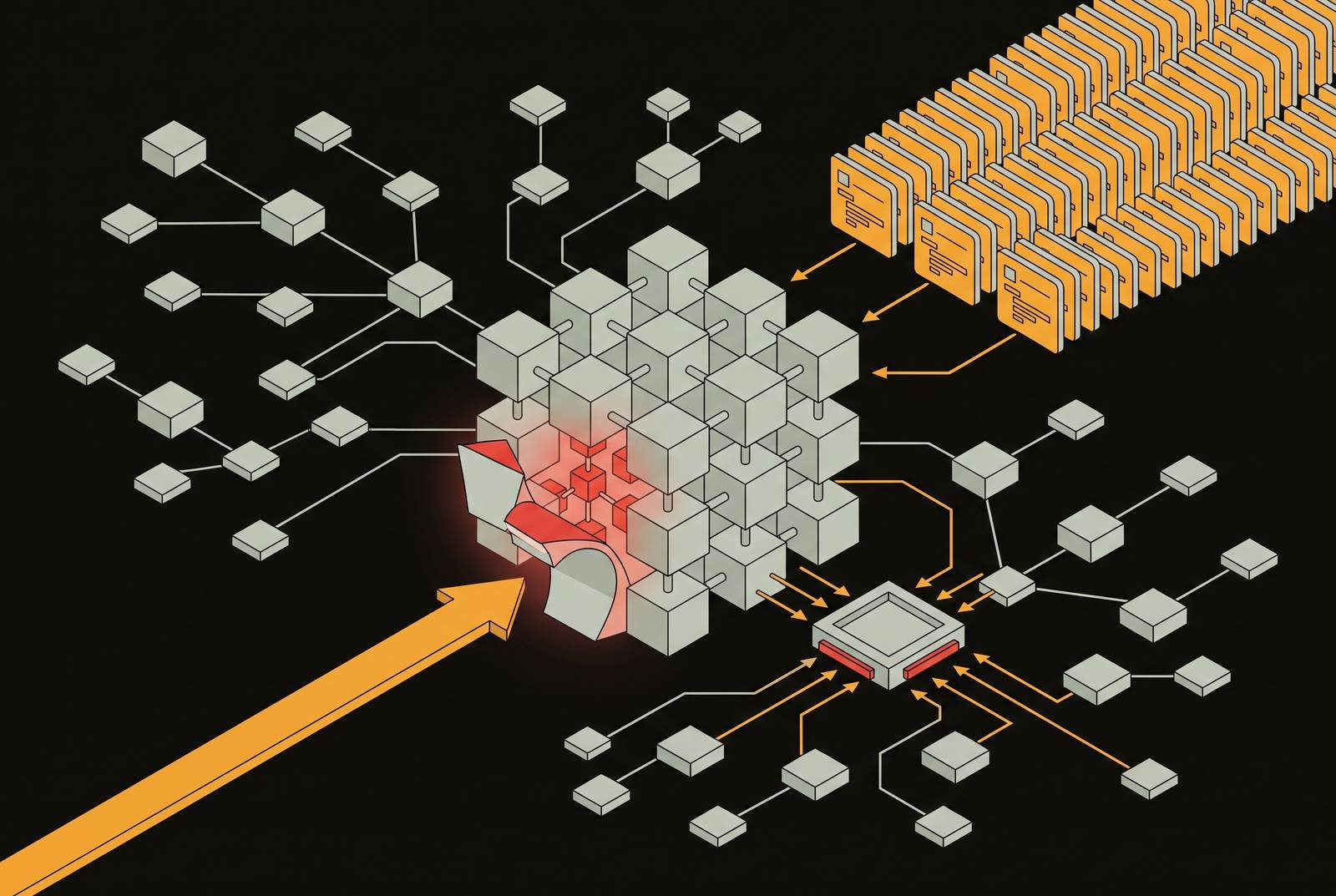
GraphQL introspection abuse and batch query attacks are not bugs that slipped through a rushed implementation. They exploit features the GraphQL specification ships by design, and that single fact changes what a defensible security posture has to look like. REST spreads functionality across dozens or hundreds of endpoints, so an attacker mapping a REST API has to enumerate routes one at a time, a slow process that leaves a noisy trail defenders can often catch. GraphQL collapses that entire surface into one endpoint and treats schema self-documentation as a first-class part of the spec, so the attacker's reconnaissance problem gets solved before a single exploit gets written.
The specification requires a conforming GraphQL service to support introspection. Every major framework lets you turn introspection off in production, but that option sits outside the spec's core intent, so when you disable it you change behavior the spec was built to provide instead of patching a flaw. Three architectural traits stack on top of that tension and make the exposure worse. The single endpoint means path-based web application firewall rules and per-path rate limits have nothing to grab onto, because every request hits the same URL no matter what it asks for. The client builds its queries at runtime rather than sending a fixed JSON body, so input validation has to inspect the shape of the query's abstract syntax tree instead of checking a predictable payload format. And one HTTP request can bundle multiple operations together, so counting requests to enforce a rate limit counts the wrong thing.
Those three traits combine with the introspection default to produce a single asymmetry. An attacker's reconnaissance cost approaches zero: one query against __schema returns the map. A defender's cost gets paid everywhere at once, in every resolver, every input type, every mutation added to the schema, because each one is a new place where the architecture's default openness has to be closed off by hand.
Introspection and the complete API map
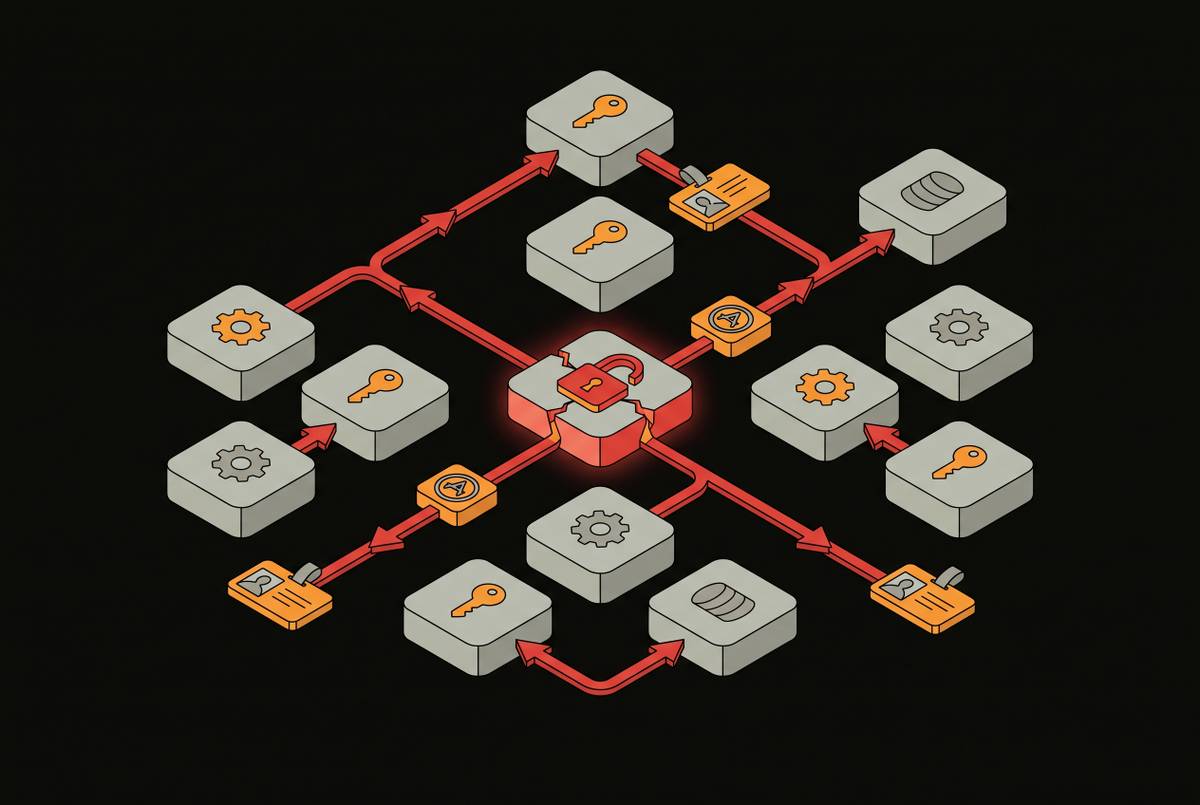
A single enabled introspection query returns the complete type system: every type, every field, every argument, every input-object shape, every mutation including admin-only ones, every deprecated field still active in the codebase, and any inline developer description left in the schema for internal reference. You are handing an outsider the internal API documentation engineers write for each other, the kind that normally never leaves a private wiki.
Once that schema comes back, a few categories of findings get an attacker's attention immediately:
- Authentication mutations like login, resetPassword, or createToken, which accept credentials as arguments and become immediate candidates for brute-force attempts via batching
- Admin-typed objects such as AdminUser, InternalConfig, or SystemSettings, whose mere presence in the schema confirms privileged operations exist somewhere behind them
- Deprecated fields that remain technically active in the resolver layer, often with weaker or forgotten access controls left over from when they were still part of the public interface
- Input-object shapes that expose privileged fields directly, for example an UpdateUserInput type carrying name, email, role, isAdmin, and balance all in one structure, which sets up mass assignment attacks with no further digging required
- Nested object relationships that let an attacker traverse from a low-privilege object to a high-privilege one, turning the path from public query to sensitive data into a graph the attacker can simply read off the schema
Tools built for this exact workflow can turn the raw response into something actionable in seconds. GraphQL Voyager, a schema visualization tool, takes an introspection response and renders it as an interactive relationship graph, so an attacker pastes in one JSON blob and gets back a visual map of every type, every connection between them, and every admin mutation or internal service field sitting inside. Exploration interfaces compound the problem further. GraphQL Playground, GraphiQL, and /voyager paths, along with embedded Explorer instances, appear exposed on production servers more often than the risk would suggest, and each one hands an attacker a full working IDE over the API with zero tool setup required on their end. Security researchers and industry reports consistently name introspection as one of the most exploited features found in production GraphQL environments, because it's left switched on by default more often than it should be.
Disabling introspection does not close the schema exposure window
Turning introspection off removes one disclosure path. It does not remove the others, and that distinction matters because teams frequently treat the introspection toggle as the whole fix. Field suggestion errors stay active by default, and automated tooling that reads them can reconstruct a working schema without ever sending an introspection query.
Clairvoyance, an open-source tool built for exactly this purpose, automates the reconstruction. It submits wordlist-based guesses for field names, harvests the suggestion errors the server returns when a guess is close but wrong, and iteratively rebuilds a partial schema from those hints. You can recover common schema patterns covering users, orders, products, and roles in a matter of minutes. The same technique works against enum values: when an API's error message confirms that a submitted term is an invalid enum value, an attacker brute-forcing a list of likely terms can recover the complete set of valid values, including entries like superadmin that were never documented anywhere public.
Client-side JavaScript adds a third leak on top of the first two. Frontend code frequently ships hardcoded query strings that reveal field names, argument structures, and type relationships the server refuses to hand over through introspection or suggestions. An attacker reading a bundled JavaScript file gets a partial schema for free, no probing required.
The fix for field suggestions is real but far from automatic, and it varies by framework. Apollo Server has no built-in flag for this and requires a custom validation rule written specifically to suppress the suggestions. Other frameworks make it a configuration toggle: Strawberry offers disable_field_suggestions=True, GraphQL Hive offers blockFieldSuggestions: true, and graphql-armor offers blockFieldSuggestion.enabled. Each of these sits as a separate control from the introspection disable flag: a team can switch off introspection, leave field suggestions running, and have no idea the schema is still being read out through error messages one guess at a time. The attacker's reconstruction capability survives both layers that most teams believe are their defense.
How batch query attacks bypass rate limiting by design
GraphQL offers two batching mechanisms built as client conveniences: alias batching inside a single operation, and array batching across multiple distinct operations packed into one HTTP request. Both are fully spec-compliant. Both become primitive but effective tools for bypassing rate limits, because rate limiting almost always counts HTTP requests, and batching lets an attacker pack an enormous amount of work into just one.
Alias batching works because GraphQL lets you request the same field more than once inside one operation, each time under a different name. An operation carrying a large number of aliases pointed at the same expensive resolver multiplies the backend's workload by that alias count, all while the HTTP request count stays at exactly one. No per-request rate limit sees anything unusual, because nothing about the request count changed. Array batching stacks a second multiplier on top: implementations that support it will accept several distinct operations bundled into a single HTTP request. Combining array batching with aliasing and some query depth turns one HTTP request into a resource-exhaustion load bomb.
The clearest case is a login mutation that an attacker rate-limits at the HTTP request level. An attacker sends a single request containing many aliased login attempts, each alias carrying a different password guess, and the server dutifully executes all of them before any rate-limit counter has the chance to increment even once. The same pattern transfers directly to OTP verification endpoints, password reset mutations, and any mutation that takes a credential as an argument. None of this counts as a clever exploit chain. It's the alias feature working exactly as the spec describes, pointed at a mutation the engineering team assumed would be protected by request-level throttling. The attack surface keeps growing with the schema itself: every new resolver, type, or mutation added is a potential new resource-exhaustion vector, whether or not anyone intended it to be reachable that way.
How introspection-enabled schema maps feed authorization attacks
GraphQL does not enforce authorization by default. Each resolver has to be secured individually, so an attacker who has already reconstructed the schema, whether through introspection or field suggestion abuse, already knows which objects and mutations are worth probing for ownership and privilege failures. Schema exposure and batching aren't separate problems sitting side by side. Schema knowledge is what turns authorization testing from guesswork into a targeted kill chain: discovery enables targeting, targeting enables exploitation.
Broken Object-Level Authorization, known as BOLA, is the most frequent and highest-impact vulnerability class in GraphQL deployments. It happens when authorization gets checked at the gateway or inside the authentication wrapper, but the resolver handling a nested type never verifies that the current user actually has access to the specific object being requested. An attacker authenticated as User A substitutes User B's identifier into a query argument, and if the resolver checks only that a valid token was provided, User B's payment details, shipping address, and order history come back to User A without complaint. The same gap extends to mutations: an attacker passes an admin user's ID into an updateProfile mutation and overwrites that account's details directly. Schema disclosure turns this from guesswork into a systematic sweep. The attacker enumerates every type carrying an id argument and probes each one in sequence, so if you already know the schema, work that would take hours against an undocumented REST API takes minutes.
Broken Function-Level Authorization, BFLA, follows the same logic at the mutation level. Admin-only mutations sit right there in the schema for anyone to see, and an attacker simply invokes one using a low-privilege token to find out whether the server actually enforces the distinction between roles or just assumes nobody outside the admin panel would know the mutation's name.
Mass assignment attacks close the loop you saw opened in the earlier input-object example. Introspection reveals every field inside an input type, privileged fields included, so an attacker sends something like UpdateUserInput { role: "admin", isAdmin: true } through a legitimate-looking mutation and watches to see whether the server silently persists those fields. Mutations that accept a complete input type and save it without filtering out sensitive fields hand over a direct path to privilege escalation.
A second authorization gap occurs when an authentication check applied to a root query fails to propagate down into sub-queries or fragments. Requesting a protected field as a child of a public one returns the data with no token validation at all, since the check never ran against that part of the query tree. And mutations that accept URLs as arguments, avatar upload fields, webhook configuration fields, link preview generators, open the door to server-side request forgery. Testing these means injecting internal IP ranges and cloud metadata endpoints, including the AWS metadata service address and localhost admin paths, to see whether the server will fetch internal resources on the attacker's behalf.
What a real GraphQL penetration test covers
Introspection enumeration, field suggestion reconstruction, alias-based rate-limit bypass, resolver-level BOLA, and query depth exhaustion are all GraphQL-specific attack surfaces, and REST-oriented testing approaches, along with generic scanner output, miss them systematically. A scanner built to walk REST paths and check standard headers has no concept of a schema, an alias, or a resolver, so it checks none of the things that actually matter here.
A structured GraphQL test runs through five phases rather than a generic checklist:
- Phase 1, schema enumeration: send the standard introspection query, load the result into a schema visualizer, and analyze it for authentication mutations, admin-typed objects, deprecated fields still active, and traversal paths running from low-privilege objects to high-privilege ones
- Phase 2, schema reconstruction when introspection is disabled: run Clairvoyance against the endpoint, cross-reference the results with query strings pulled from client-side JavaScript, and confirm whether field suggestions remain active despite introspection being turned off
- Phase 3, injection testing: every string and integer argument across every query and mutation is a potential injection surface, tested with standard SQL and NoSQL payloads, using the InQL Burp Suite extension to auto-generate query templates for every discovered operation so no argument gets skipped
- Phase 4, authorization testing: test BOLA on every id argument by querying with identifiers belonging to other accounts, test BFLA by invoking admin-only mutations with a low-privilege token, and test mass assignment by passing input-object fields that never appear in the public-facing form
- Phase 5, batching and depth stress: test alias batching and array batching separately against rate-limited mutations, and verify that depth limiting is actually enforced at the schema validation layer rather than assumed
Methodology choice shapes how much of this a test actually covers. Black-box testing stays attacker-realistic, because it relies on introspection queries and field suggestion enumeration to discover the schema from scratch, but it takes longer and it can miss private or deprecated fields that never surface through either technique. Grey-box testing starts from partial information, credentials and basic architecture context, and it simulates an attacker who already has initial access. That lets testers spend their time on meaningful vulnerabilities instead of days of pure reconnaissance, and it tends to catch both external and internal issues in the same engagement. It is the approach recommended for most SaaS companies because it balances realism against efficiency.
A few signals separate a genuine GraphQL test from a scan dressed up as one. A report that never distinguishes alias batching from array batching, or never tests them as separate mechanisms, has not tested batching. A report that notes introspection is disabled and stops there, without checking whether field suggestions are still active, has stopped at the first toggle rather than finishing the job. If findings carry only generic CVSS descriptions, with no proof-of-concept query demonstrating the exploit in practice, they describe a risk category rather than a confirmed vulnerability. And if a report shows no evidence that every mutation was tested for BFLA using lower-privilege tokens, not just the top-level query entry points, the admin-mutation surface has gone almost entirely unexamined.