Network Port and Service Enumeration Against Cloud-Hosted Targets
Cloud firewalls and load balancers hide services that port scans alone cannot reveal.
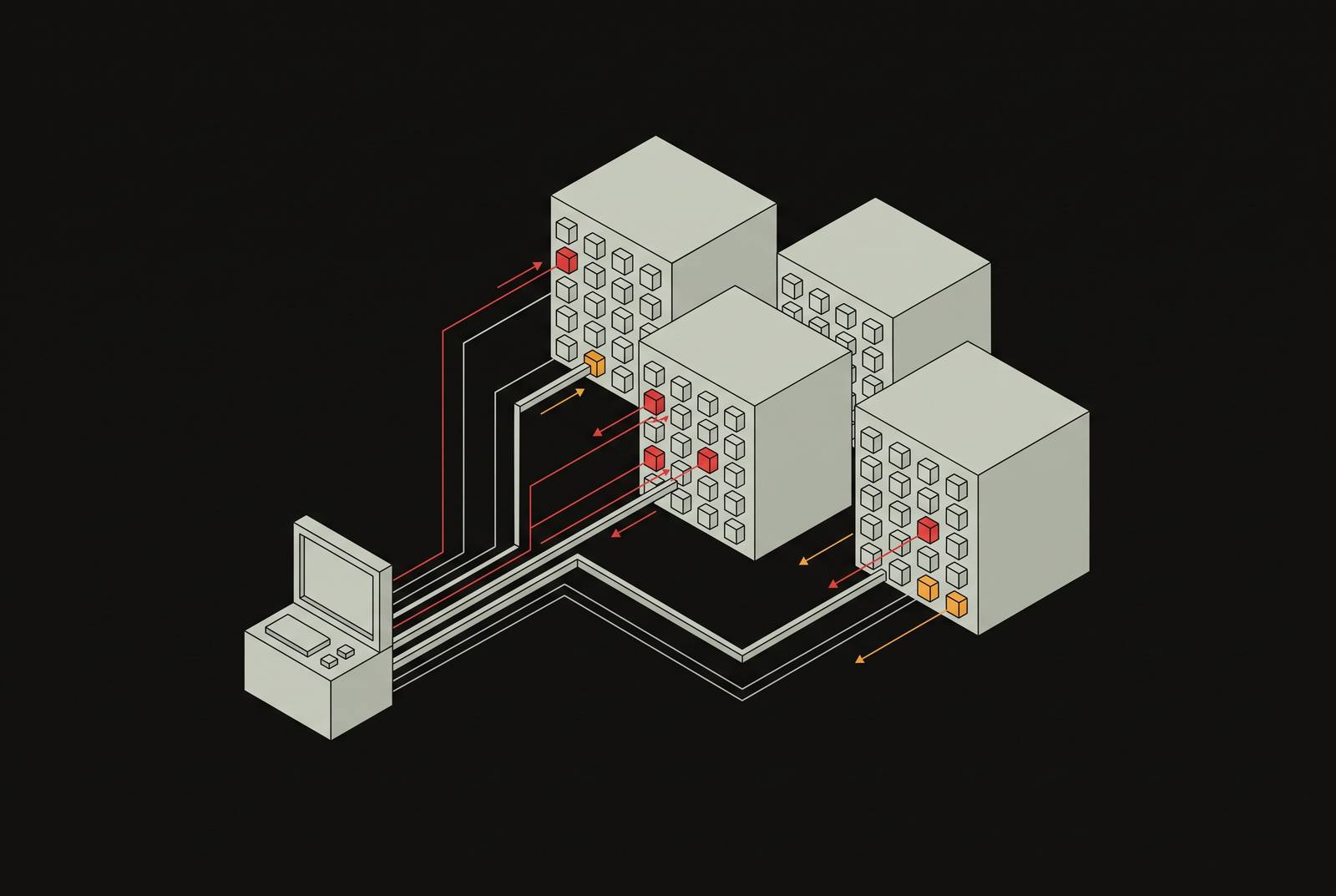
A full Nmap sweep against a cloud target often comes back sparse: a handful of open ports, a few filtered, nothing dramatic. The instance behind that IP can be running dozens of services. Port and service enumeration against cloud infrastructure uses the same packet-based mechanics as any on-premises scan, but the cloud environment filters, reshapes, and hides what those packets reveal, so sparse results mean something different here than they do on a rack server.
Port scanning against cloud targets versus on-premises
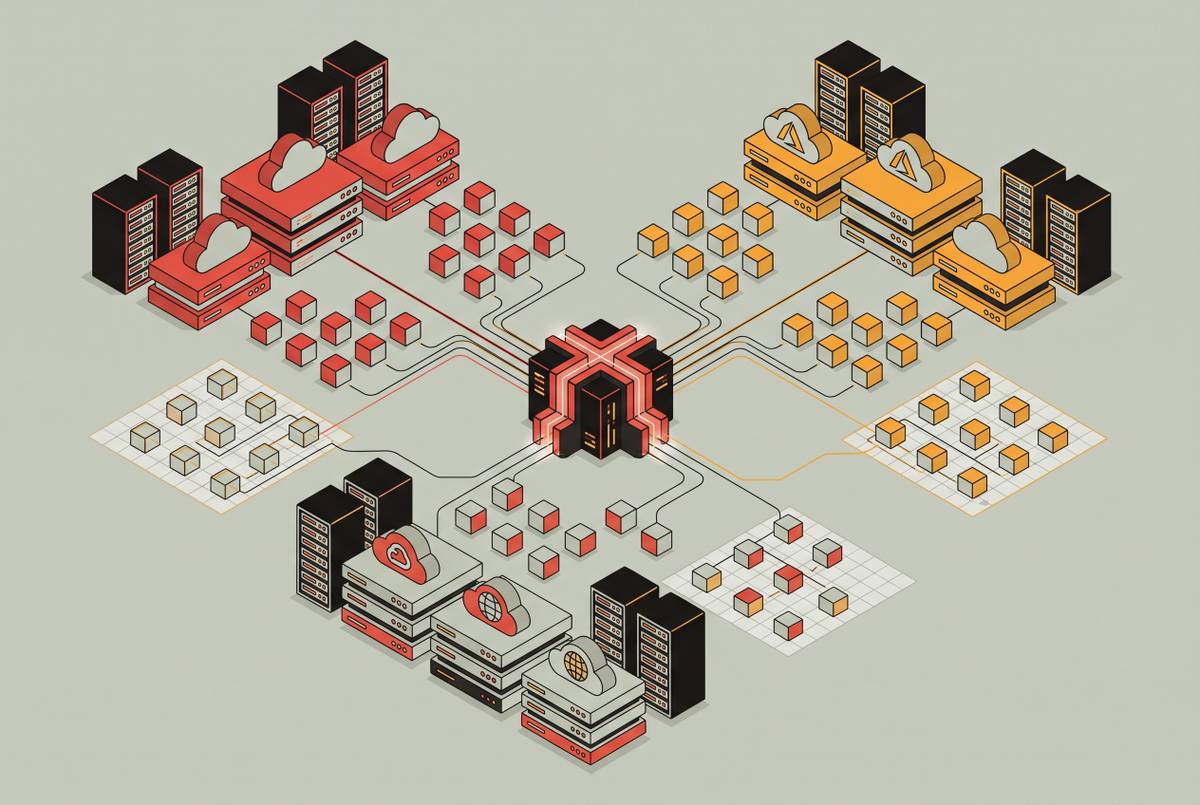
The stimulus-response loop never changes. A tester sends packets, and the packets that come back show live hosts, open ports, and running services, whether the target sits in a data center rack or runs as an EC2 instance. What changes is everything standing between the probe and the service it's aimed at. Cloud targets sit behind WAFs, CDNs, load balancers, and provider-managed firewalls, so a packet crosses several layers of mediation before it ever reaches the host.
Cloud infrastructure also moves. Auto-scaling groups, Lambda functions, and Kubernetes pods spin up and down on their own schedule, so the attack surface shifts during the engagement itself. A service that answered a scan run in the morning might not exist by the afternoon. Astra's cloud penetration testing guide addresses this directly: cloud penetration testing has to account for ephemeral assets like EC2 instances, Lambda functions, Kubernetes pods, and managed services that spin up and down dynamically, and the guide separately points out that auto-scaling, containers, and serverless functions can cause vulnerabilities to appear and disappear mid-test. Fixed, on-premises infrastructure doesn't present that problem.
Treating a cloud engagement like an external network test against a different block of IP addresses compounds the mistakes fast. Filtered ports get written up as closed services. Entire service categories that never expose a TCP port in the first place get missed entirely. The resulting report describes a network that doesn't match the one actually running.
What cloud perimeter controls do to scan results
Each layer standing between a scanner and a cloud-hosted service bends the result in a specific, predictable way. None of it is random, and recognizing the pattern is what separates an accurate read from a wrong one.
Security groups and network ACLs act before a packet ever reaches the host's operating system. A port that comes back filtered might be wide open on the instance itself, simply blocked upstream at the provider layer. That distinction carries its own weight, because a misconfigured security group rule is a finding in its own right, separate from whatever is running on the port. Astra's guide points to AWS CLI commands like aws ec2 describe-security-groups as the way to surface a security group that permits traffic from any source address, the cloud equivalent of a firewall rule left wide open. A port scan by itself won't catch that the rule, not the host, is the actual problem.
CDNs complicate things differently. A CDN terminates the connection at its edge node, so whatever Nmap fingerprints there is the CDN's own stack, not the origin server behind it. Service version data and OS detection run against a CDN edge tell a tester almost nothing useful, because the real exposure lives in the origin server and in whatever paths let traffic bypass the CDN altogether.
Load balancers introduce a mapping problem. A single IP address can front several backend services behind the same port, so a version scan against port 443 might identify one application while three others sit behind that same listener, invisible to the scan. Enumeration has to account for that one-to-many relationship instead of assuming one port equals one service.
WAFs go further than any of these and actively shape what comes back. They can send TCP resets, mimic closed-port responses, or hold a connection open and silent, depending on the probe pattern they detect. Nmap reads all of that as closed or filtered, even when the underlying service is live and serving legitimate traffic without issue.
A closed or filtered result from Nmap against a cloud target is a starting point that needs checking against the cloud control plane before anyone treats it as proof that nothing is there.
The cloud control plane as a parallel attack surface that port scanning does not reach
Cloud-hosted targets carry a second attack surface that no port scan touches: the provider's management API. That layer is often more exploitable than anything sitting on a TCP port.
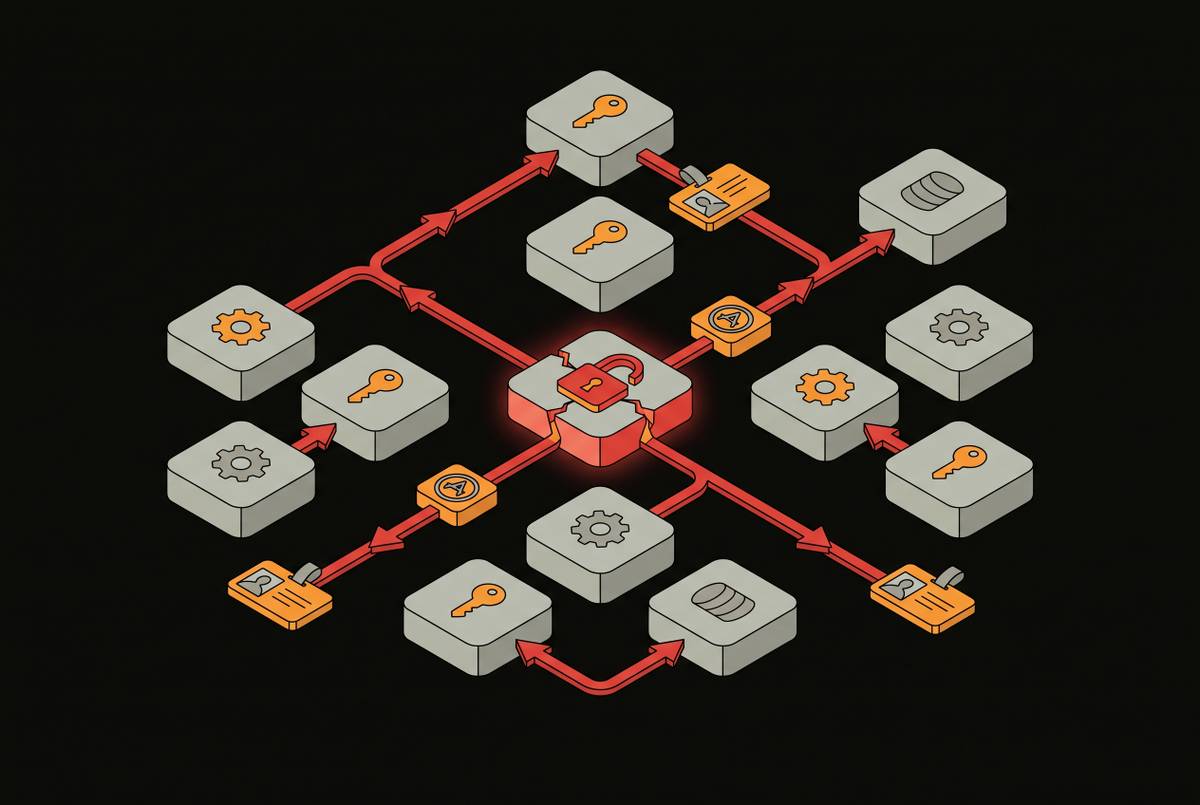
On a traditional network, meaningful access runs through interfaces a scanner can reach. In a cloud account, the provider's API controls instance configuration, storage permissions, IAM roles, and network rules, and none of that activity shows up as a listening port. Misconfigured IAM roles, overly permissive policies, and temporary credentials issued through AWS STS or federated identity systems using SAML 2.0 or OpenID Connect are among the most common ways attackers get into cloud environments, and a methodology built entirely around port scanning won't catch any of it. Astra's guide treats IAM roles, policies, temporary tokens, and federated identity as a distinct focus area in cloud penetration testing, one with no equivalent category in a traditional on-premises test.
Storage services carry the same blind spot. S3 buckets, EBS volumes, and RDS instances expose data through IAM-governed API calls rather than through open ports, so a publicly readable S3 bucket produces zero signal in a port scan. Infrastructure-as-code artifacts, Terraform templates, CloudFormation stacks, CI/CD pipeline definitions, belong to this same surface, since a misconfiguration in the provisioning automation gets copied into every resource that automation touches.
Server-side request forgery is the exploit that connects these two worlds. An SSRF vulnerability in a cloud-hosted application can reach AWS's instance metadata endpoint at 169.254.169.254 and pull back IAM credentials, turning an application bug into direct control-plane access. An application-layer finding becomes a cloud-plane compromise the moment that request goes through.
In cloud environments, scanning alone becomes insufficient at this point, because it maps the network surface but not the control-plane surface. A tester who sticks to port scanning maps the network surface and leaves the control-plane surface, frequently the more dangerous of the two, completely unexamined.
How to adapt the enumeration toolkit for cloud targets
Covering both surfaces means running traditional scanning tools alongside cloud-native ones, in a sequence that builds one layer of understanding on top of the other.
Port scanning still opens the process. A full TCP scan with version and script detection, nmap -sV -sC -p-, remains the baseline for network-layer exposure, with the understanding that every result needs to be checked against the cloud distortions already covered rather than taken as fact. HackerDNA's 2026 methodology guide treats thorough service enumeration, every open port, every version string, every exposed share, as the foundation that later exploitation decisions get built on.
Masscan fits ahead of that detailed pass. It handles fast, large-scale port discovery across wide IP ranges, so detailed Nmap scans only run against hosts actually confirmed to exist. EC-Council's 2026 tool guide describes Masscan as built for exactly that kind of large-scale discovery, using asynchronous TCP SYN scanning to cover huge address ranges quickly.
Shodan fills a different gap: finding internet-facing cloud assets that a scan limited to known IP ranges would never catch, services sitting on non-standard ports, mistakenly treated as internal, or published by accident. Astra's guide places Shodan next to Nmap during the inventory mapping stage for this reason.
From there, the work shifts onto the control plane itself. AWS CLI commands, aws ec2 describe-instances, aws s3 ls, aws iam get-account-authorization-details, aws ec2 describe-security-groups, pull back the actual resource and permission state that no port scan can see. Astra's guide recommends setting up the AWS CLI with read-only credentials for reconnaissance, then using aws iam get-account-authorization-details to pull every IAM user, group, role, and policy and check it for excessive permissions.
Scout Suite handles multi-cloud configuration auditing, generating reports that flag IAM misconfigurations and S3 bucket permission problems, covering the configuration-review ground that neither Nmap nor Shodan reaches. CloudMapper, originally built to produce visual network diagrams of AWS infrastructure (a feature no longer maintained), now focuses on security auditing and makes it practical to map relationships between services at the scale cloud environments actually run at. Astra's guide uses CloudMapper specifically for mapping those service relationships during inventory work. S3Scanner checks bucket permissions, read, write, read ACP, write ACP, across both public and authenticated users on S3-compatible storage, catching a category of exposure that never produces a network-layer signal but hands an attacker direct access to data. Astra's guide includes S3Scanner in its AWS configuration review toolset, and industry data put the share of S3 buckets still publicly accessible at 1.48% as of 2024.
Running broad network discovery first establishes what's reachable. Cross-referencing that against control-plane enumeration shows what's actually running. Comparing the two matters most of all, because any gap between what the network shows and what the API shows is itself a finding.
Reading cloud scan results correctly: what filtered, closed, and open mean here
Getting the tools right doesn't help much if the results get misread. Cloud scan output needs three layers of interpretation at once, network response, control-plane state, and application behavior, since reading any one of them alone leads to the wrong conclusion about what's actually exposed.
Take a filtered port. It can mean the security group is blocking it, a host-level firewall is blocking it, or a WAF is actively dropping the probe packets. Only the security group case shows up by checking the control plane, and only the WAF case can be confirmed by varying the probe pattern and watching how the response changes. Treating all three as interchangeable produces a wrong answer no matter which one is actually true.
Banner grabbing runs into a similar trap. In most cloud engagements, the version string Nmap pulls back belongs to a CDN or a load balancer rather than the application or operating system underneath. Picking an exploit based on that string without verifying it against the origin server is a direct path to wasted effort or worse.
An open port on a non-standard number carries more weight in a cloud account than it would on-premises, because cloud security groups have to be explicitly configured to allow that traffic through. Nothing opens by accident the way it sometimes does on a flat internal network, so a non-standard open port signals a deliberate or an accidental rule change, and either one is worth running down. A full TCP scan catches services like these that a top-1000 port scan would miss entirely, and in cloud environments they often ended up exposed precisely because they were stood up outside normal change management.
Logging coverage belongs on the enumeration list too, not as a side note but as its own target. Astra's guide lists validating that CloudTrail, CloudWatch, and Azure Monitor actually capture events from ephemeral workloads and serverless triggers as part of standard cloud penetration testing methodology. A gap in that logging coverage is a finding on its own, independent of anything else discovered during the test.
A service missing from the port scan but present in the API inventory is potentially reachable through internal routing or the metadata endpoint, and is not safely absent.
From open ports to real attack paths in cloud enumeration
A list of open ports isn't the point of any of this. A network-layer finding and a control-plane misconfiguration combine into an actual attack path that neither one reveals sitting by itself.
An SSRF vulnerability on a cloud-hosted application paired with an overly permissive IAM role attached to the instance turns a mid-severity application bug into full control-plane access. Port scanning alone wouldn't catch this. IAM review alone wouldn't catch it either. Spotting it requires both.
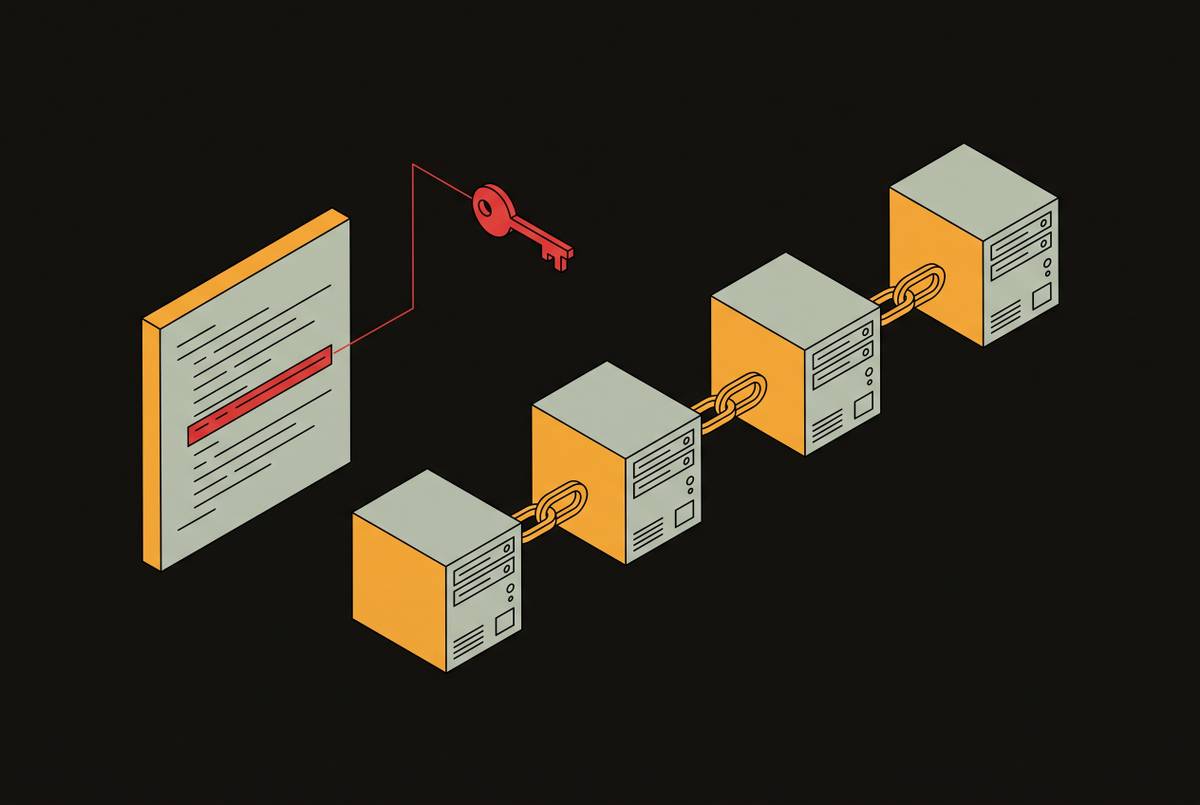
This chain plays out concretely in practice: HTML injection that leads to SSRF, with the AWS metadata endpoint at 169.254.169.254 as the target for stealing IAM credentials. Catching that chain requires mapping the application surface and the cloud configuration together, since neither piece on its own shows the connection between them.
Security misconfiguration stands as the dominant finding class across cloud-native applications, and it spans both layers at once. An open security group is a network finding. A publicly readable S3 bucket is a control-plane finding. An overly permissive IAM role that makes both of those exploitable together is a finding visible only once both layers get read side by side, and that is the standard that separates a thorough cloud engagement from a port sweep with a cloud provider's name attached to it: whether the testing covers both surfaces, and whether it connects them.