SQL Injection in ORM-Backed SaaS Endpoints
Modern ORMs don't eliminate SQL injection—developers do when they bypass protections.
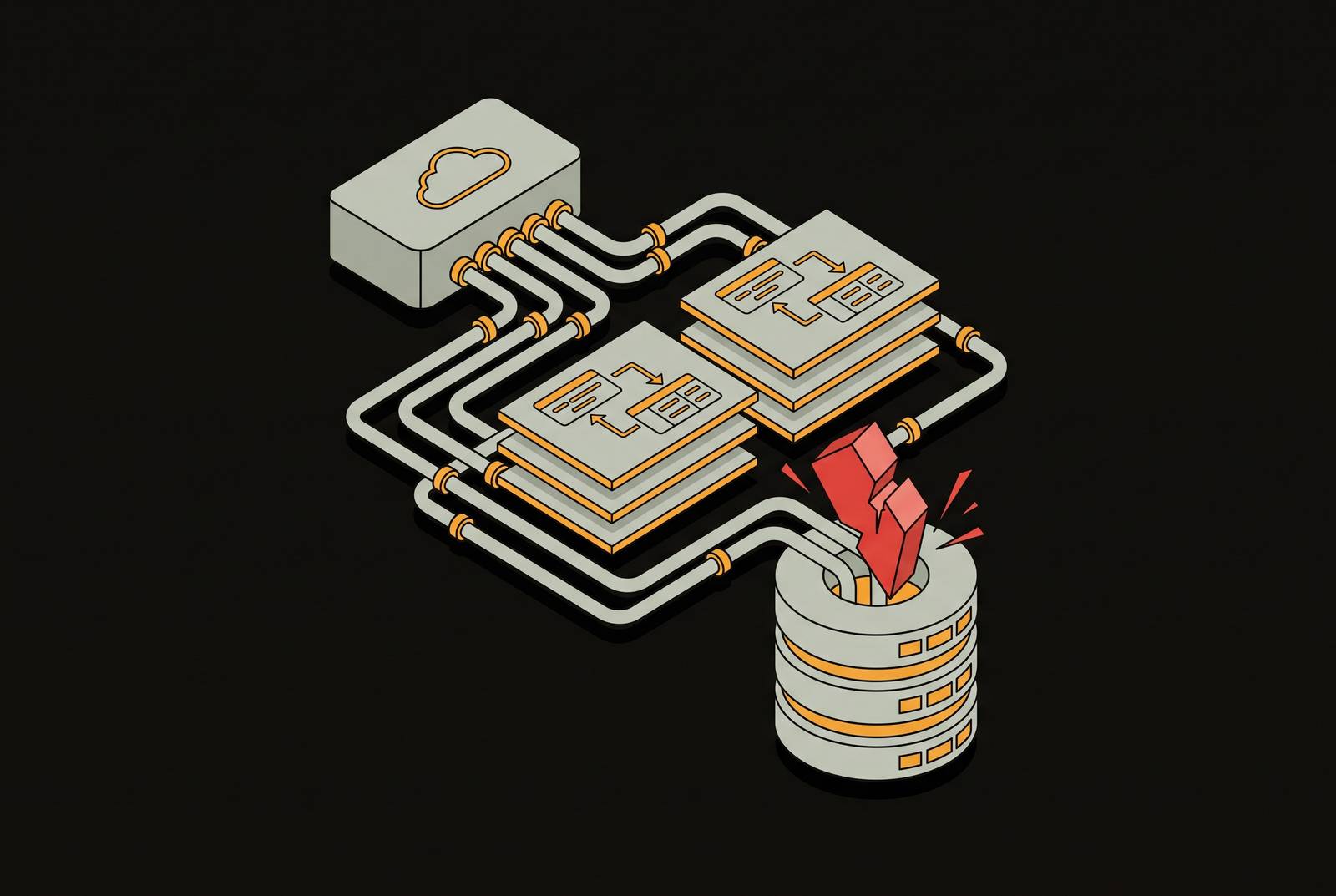
ORMs cut down on SQL injection. They do not remove it. The most dangerous injection findings in modern SaaS applications appear not in the query-builder code that ORMs were built to protect, but in the raw-query escape hatches and dynamic filter code developers reach for when the ORM won't do what they need. A recent audit of six companies found exploitable SQL injection in five of them, and none of the five were running legacy PHP. They were Node.js, Python, and Java applications, all built in the last 18 months. Every engineering lead gave the same answer when asked about it: "I thought the ORM prevented that."
It doesn't, not automatically. That gap between what developers assume and what the tooling actually promises is where this article lives.
Start with what an ORM actually guarantees. It parameterizes queries built through its own query-builder API. That's the whole guarantee. The moment a developer steps outside that API, using a raw query method, dropping string interpolation into a literal() call, or building a WHERE clause by hand, the protection is gone. The code still runs. It still looks like ORM code. It just no longer behaves like it.
This isn't a theoretical concern buried in an old OWASP list somewhere. Injection sits in the OWASP Top Five (A05:2025), and SQL injection remains the subtype most directly convertible into full database compromise. The stakes aren't abstract either: CVE-2025-1094, a SQL injection flaw in PostgreSQL, was exploited in January 2025 to breach BeyondTrust's Remote Support platform. The intrusion chain from that single flaw ran all the way to the US Treasury Department.
This piece maps where injection survives ORM adoption, what the code actually looks like when it does, and how testers move from a suspicious signal to a proven, exploitable finding.
The three ORM escape hatches where injection lives
Nearly every ORM ships an escape hatch, a .raw(), .query(), or something like Sequelize's literal(), for the queries the builder syntax can't express. That's escape hatch number one, and it's the most direct.
The contrast is stark once you see it side by side. User.findOne({ where: { email: userEmail } }) is safe. Sequelize parameterizes it under the hood. User.findOne({ where: sequelize.literal(email = '${userEmail}') }) is not safe, even though it's the same framework, same model, same method name almost. The literal() call swallows the parameterization guarantee whole. The developer's justification is usually reasonable: the ORM can't express a particular JOIN, or the query-builder version is too slow. Both are legitimate problems. A raw query is sometimes genuinely needed, but the habitual fix is string interpolation, when named parameters inside that same raw call are the correct pattern.
Escape hatch two is dynamic filter construction, and it's sneakier because it doesn't look like database code. It looks like array manipulation. A search endpoint, a reporting page, or a data-export feature takes a variable number of filter conditions from the user, builds up a list of string fragments, and joins them into a WHERE clause before sending it to the database. Each fragment reads like an innocent bit of application logic. Strung together, they're a query. This pattern occurs constantly in modern SaaS, precisely because it doesn't announce itself as SQL.
Escape hatch three is newer: AI-generated code. A meaningful share of production code now comes out of AI coding tools, and that code carries significantly more vulnerabilities than code written by hand. Part of the reason is mechanical. Training corpora are full of string-concatenation query examples, so the model reproduces that pattern because it's common, not because it's safe. The generated code runs fine. Reviewers checking it are looking for correctness, and the ORM wrapper around the call makes the whole thing look protected even when the inner query isn't. Time-to-exploit for new vulnerabilities has dropped sharply in recent years. A freshly merged, AI-generated escape hatch has almost no runway before someone can weaponize it.
Third-party plugins, microservice database layers, and inherited code nobody currently owns form a secondary surface for injection risk. Injection risk tends to pool wherever ownership of a piece of code is unclear, because unclear ownership means nobody's reviewing it closely.
How injection behavior depends on what the application returns
Injection is four behaviors. It's four, and each one demands a different testing approach.
Classic in-band error-based injection is the easiest to spot: the application surfaces raw database errors, and an attacker reads schema and data straight out of the error text. It's also the easiest to fix and, in mature SaaS applications, increasingly rare, because many modern frameworks suppress detailed errors by default.
UNION-based injection is also in-band, but instead of an error message, the attacker gets results reflected back in the response. Append a second SELECT statement to the original query and the attacker can pull arbitrary rows, assuming they can match column count and data types. It's noisier to pull off than error-based injection, but it can be devastating against a multi-tenant database, since a single crafted query can potentially expose rows across multiple tenants.
Blind boolean-based injection is quieter. No error, no reflected data, just a behavioral difference: a successful response versus a not-found response, a slightly different response body. An attacker reconstructs the underlying data one true/false question at a time. It's slow, but it works against almost any endpoint whose behavior changes based on query results, which describes most SaaS endpoints.
Blind time-based injection is the hardest of the four to catch. The application's visible behavior doesn't change. The attacker injects a conditional delay, SLEEP(), pg_sleep(), WAITFOR DELAY, and reads the answer off the clock instead of the response body. Against high-value endpoints, this technique can exfiltrate sensitive state one bit at a time, and it will sail past a scanner looking for error text or reflected content.
Then there's second-order injection, which breaks the usual testing assumption. The payload gets stored in one feature (a profile field, a username) and only fires when a completely different feature later reads and processes that stored value, maybe a scheduled job, maybe an admin report. Fuzzing the original input field won't find it, because nothing happens at input time. Finding it requires actually tracing how data moves through the application.
The reason this taxonomy matters for SaaS specifically: many SaaS products return minimal information to the end user. That means a substantial share of real injection surface in production behaves as blind or second-order, which are exactly the two modes that automated scanning is worst at catching.
Testing methodology: confirming injection from probe to proof of exploitability
Scanners flag suspicious fields. That's all they do. Whether an input actually reaches an interpreter with enough control to pull data, escalate privilege, or run arbitrary commands only gets answered through manual exploitation.
A rigorous approach to SQL injection specifically runs through eight steps.
First, map the attack surface completely: every form field, URL parameter, HTTP header, cookie, file upload, API request body, WebSocket message, and GraphQL parameter that could conceivably touch a database query. Second, narrow that list to candidate injection points, weighting toward dynamic filters, search boxes, sort and order parameters, and export or reporting endpoints, since those are where hand-built query logic tends to hide.
Third, send differential payloads. Submit a normal baseline value, then a modified one with special characters, a single quote, a comment sequence, a semicolon, and compare what comes back. A change in response length, status code, or timing is the signal worth chasing.
Fourth, when nothing obvious shows up, confirm blind injection directly: inject conditional delay payloads and measure response time, or inject boolean conditions designed to flip application output one way or the other.
Fifth, and this is the step that separates a real finding from a guess, attempt actual data extraction. Pull a database version string. Pull a real user record or a tenant ID. A suspected injection point becomes a confirmed one only once something real comes out of it.
Sixth, test for second-order injection on purpose: store a payload in a field that accepts user data, then go trigger every other feature that might later read that value back out.
Seventh, chain the finding to whatever else is nearby, broken access control, a privilege escalation path, to show the real business impact: cross-tenant data exposure, an exposed admin credential, something concrete.
Eighth, once a fix ships, retest the exact original payload plus at least three variants, because sanitization patches routinely miss adjacent code paths shipped in the same release.
For SaaS specifically, a confirmed injection inside a tenant-scoped query needs one more question asked of it: does it stay inside the tenant boundary, or can it cross into someone else's data? Billing and subscription logic deserves the same scrutiny, since it's high-value and rarely gets covered in standard test scopes.
PCI DSS 4.0 auditors expect to see evidence that testers actually tried to extract data, not just that they fuzzed a few parameters and got an interesting response. A scanner export listing "potential SQL injection" is not exploitation proof, and auditors treat it accordingly. Injection testing is a required element across PCI DSS and SOC 2 assessments because a single unauthenticated injection point can expose an entire database in one query, and the frameworks are written with that risk in mind.
Why most security programs fail to detect blind and second-order injection
Most automated scanners confirm SQL injection by looking at error output or reflected data in the response. Blind and second-order injection produce neither. These tools miss them by design, not by accident.
Second-order injection is close to invisible to a point-in-time scan. The payload sits dormant at the moment it's stored, and only fires later, when a separate code path, a cron job, an admin dashboard, a reporting feature, actually processes it. A tester working inside a fixed engagement window may never touch that second code path.
Testing programs that stop once they've confirmed a first-order, error-based finding are walking past the highest-impact vulnerabilities in the application. The injection issues that do the most damage tend to be the ones a scanner flags last, or never flags.
Timeline compression makes this worse. Some compliance-driven engagements get squeezed into two-day windows when the scope actually needed something closer to three weeks. Blind injection chains, which require patience and multiple rounds of behavioral testing, simply don't surface in that kind of window. Adding AI-generated raw query patterns that can land in any pull request and become exploitable within days makes an annual test cadence look like it's tracking a moving target with a still camera.
The better approach is whitebox testing: give the tester source code access so they can find raw query calls and dynamic filter construction directly in the codebase, then write payloads aimed at those exact patterns. That beats fuzzing every input field on the site and hoping something throws an error.
A confirmed blind injection finding, done properly, should come with the exact payload used, the specific behavioral or timing difference observed, and a demonstration of data actually extracted. A tool flag with a CVSS score attached is not the same thing, and treating it as equivalent is how real risk slips through unreported.
The hallmarks of a credible SQL injection finding in a penetration test report
A real finding includes reproduction steps, the exact payload, evidence of data extracted or behavior changed, a severity rating grounded in actual exploitability, and remediation guidance specific to the code path involved. Written by the analyst who found it, not exported from a scanning tool.
That standard lines up with what auditors expect. PCI DSS calls for manual penetration testing of the cardholder data environment. SOC 2 and ISO 27001's Annex A controls call for findings that show tested exploitability, not just theoretical exposure.
There are a few tells that a report leaned on scanner output instead of manual work. Findings that list "potential" injection points without a payload that actually confirmed execution. Severity ratings that quote a CVSS base score without adjusting for how the application actually behaves, treating a blind injection point the same as an error-based one, when the two carry very different practical risk. No second-order or blind findings at all, in an application full of dynamic filters and stored user data, which is statistically unlikely if the testing was thorough. And remediation advice that says "use parameterized queries" without naming the specific file, function, or endpoint where the problem lives.
A properly scoped engagement can satisfy SOC 2's relevant controls, ISO 27001's Annex A controls, and PCI DSS penetration testing requirements at the same time, but only if the statement of work names all three frameworks up front and the vendor actually understands the overlap. A standard SaaS-scope penetration test built for SOC 2 tends to run somewhere between $8,000 and $25,000, and dual-scoping the same engagement for SOC 2 and ISO 27001 together typically adds 15 to 30 percent on top rather than the cost of running two separate engagements.
Retesting is not optional. Patched injection points reopen through new code paths in the same release cycle often enough that a report without a retest commitment isn't a finished compliance artifact, it's a snapshot.
Questions to ask a penetration testing vendor specifically about injection testing depth
Start directly: do the testers actually check for blind and second-order SQL injection, or does the engagement stop at parameter fuzzing? A vendor who can't articulate how blind injection and second-order injection differ in the answer is unlikely to find either one in practice.
Ask for the methodology in plain terms. Pose a scenario: a reporting endpoint builds a dynamic WHERE clause from a handful of user-supplied filter parameters, how would they test it? The answer should walk through manual payload construction, behavioral comparison, and time-based confirmation techniques. If the answer is a list of tool names, that's the signal to keep asking.
Ask whether testers get source code access. Whitebox testing is the only reliable way to catch dynamic filter construction and second-order injection before the alternative, blindly fuzzing every endpoint and hoping for a hit.
Ask for a sanitized sample report. Refusing on confidentiality grounds is a red flag, since sanitized samples are standard practice across the industry. Read the sample for actual exploit evidence and extracted data.
Ask about retesting directly: is it included, and how many payload variants get retested against a patched finding? Adjacent code paths shipped in the same release often reopen a vulnerability that looked closed.
Ask about the credentials of the person actually assigned to the engagement. A CEH certification tests security knowledge through multiple-choice questions; it doesn't validate hands-on exploitation ability. For injection testing specifically, ask whether the assigned tester holds a recognized credential that requires demonstrated manual exploitation.
Watch the price. Penetration tests vary widely in cost depending on scope and type. Anything well below that range is almost always automated scanning wearing a pentest label.
Finally, ask about coverage between engagements. Given that AI-generated code can introduce a raw query vulnerability with any merged change, and time-to-exploit has dropped sharply, ask whether the vendor offers any pull-request-level scanning to bridge the gap between annual or semi-annual point-in-time tests.
Fixing SQL injection in ORM-backed code: what remediation requires
The fix is not "switch to an ORM." Most of these findings happen inside applications that already use one. The fix is closing the specific escape hatch that let the raw string through.
For raw query calls, that means named parameters inside the raw call itself, not string interpolation, even when the developer's reason for reaching for the raw method (a JOIN the builder can't express, a performance need) is completely legitimate. The raw method isn't the problem. Concatenating a variable into the query string is.
For dynamic filter construction, the fix means treating every filter fragment as parameterized input from the start, never as a string to be appended and joined. That usually means restructuring the filter-building logic so it produces parameter placeholders and a values array together, rather than building a finished query string first and asking questions about safety later.
For AI-generated code, remediation has to happen at review time, not after deployment. Reviewers checking AI output for correctness need to also check it specifically for string-concatenation query patterns, because the model will reproduce that pattern with total confidence and zero warning.
And because patches reopen through adjacent code in the same release often enough to matter, remediation finishes after a retest against the original payload and several variants. It's finished after a retest against the original payload and several variants, confirming the class of vulnerability is closed.
Sources
- How to Test OWASP A05:2025 Injection Flaws in 2026
- SQL Injection 2026: Blind, Time-Based, ORM Bypass, and WAF Evasion — Hive Security
- How to Test for SQL Injection in 2026: Practical SQLi Workflow for Engineers
- SQLAlchemy ORM Security: The Raw Query Escape Hatch
- Prevent SQL Injection: Parameterized Queries, ORM Safety Boundaries, and Dynamic Query Patterns
- SQL Injection in ORMs 2025: Why Modern Frameworks Still Aren't Safe | Propel Code
- sonarsource.com
- penligent.ai