Communicating Vulnerability Severity to Engineering and Executive Stakeholders
Different audiences need different facts from the same vulnerability data to act.
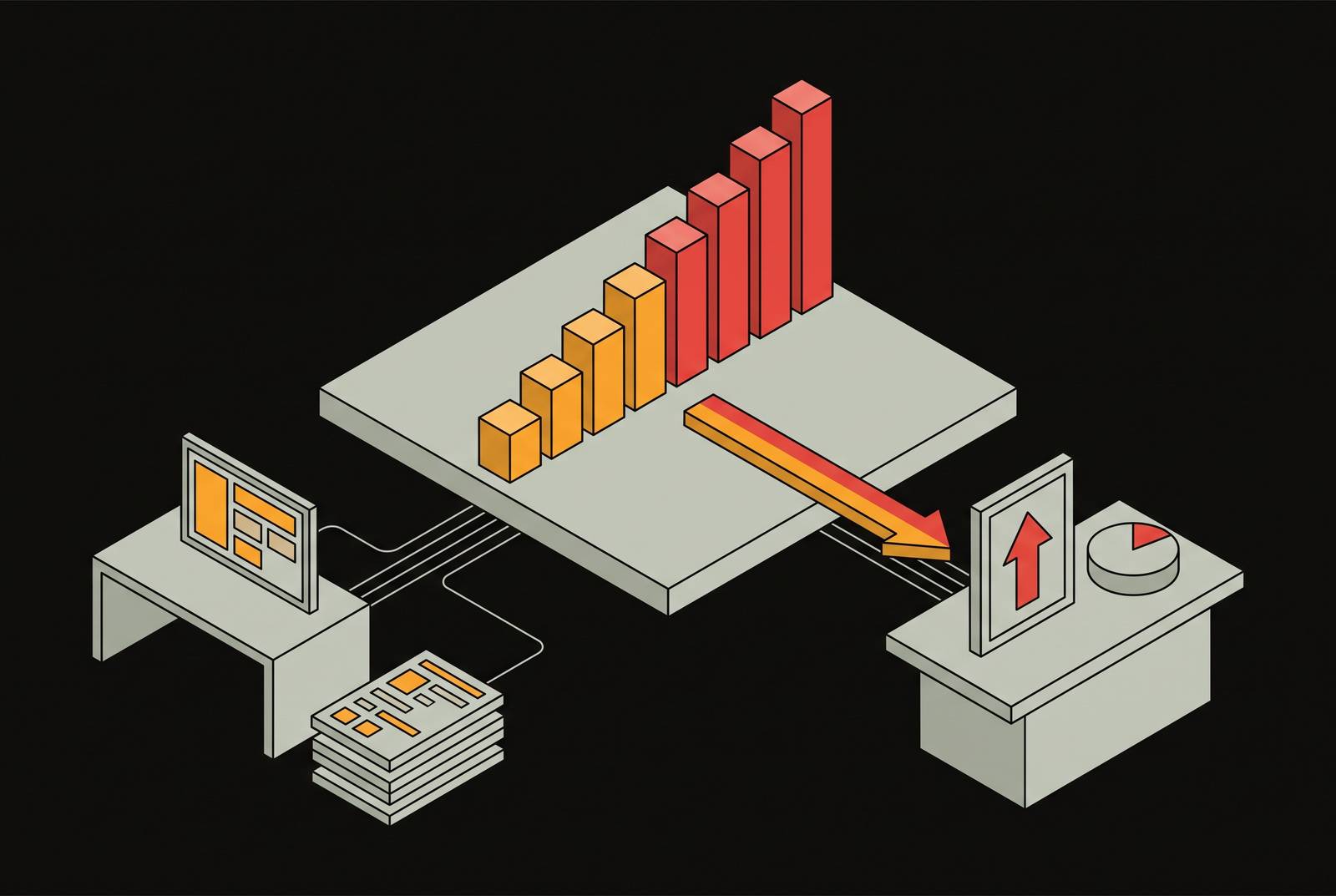
Explaining vulnerability severity means giving engineers a way to reach a verified fix and executives the facts they need to decide how to use resources. A useful pen test report produces both from the same evidence, translating technical findings into the action each audience can take.
Why the same severity score lands differently depending on who reads it
A security lead presents the findings from a pen test to engineers and executives using the same report. The engineers look for the root cause, a way to reproduce the problem, and a reason to move it ahead of other work. Instead, they find language about business exposure. The executives look for what could happen, which part of the business is exposed, and whether a decision is needed. Instead, they get technical detail and severity badges.
The report can get the findings right and still fail at its job. An engineering ticket that says “this finding poses significant reputational risk” does not tell a developer what to fix. A technical description does not tell an executive whether the response needs budget, a policy change, or no intervention at all. Both readers must do the translation themselves before they can act. When that work remains undone, findings stay in the backlog.
Engineers need to understand how a flaw works in the affected environment. Executives need to weigh what the flaw could cause against other needs for the company's resources. A shared evidence base can serve both, but an undifferentiated account of that evidence cannot. The solution starts by separating what a severity score says from what readers need it to mean.
What CVSS scores actually measure, and what they leave out
CVSS translates a vulnerability’s technical characteristics into a numeric score. It provides a shared baseline across tools and is useful for initial triage at scale. But its measure of theoretical severity under worst-case conditions is not a measure of urgency in a particular environment. It does not, by itself, establish whether exploitation is likely, imminent, or relevant to the affected business. Treating it as that answer gives the score more authority than it deserves.
Exposure changes the priority. A CVSS 9.8 on an internal-only management interface that requires authenticated access may be less urgent than a high-severity finding on an internet-facing edge service with public exploit code. Two organizations can therefore have the same CVE in their inventories and face different risks. One exposes the vulnerable component to the internet, while the other has layered network segmentation. The vulnerability is shared, but the conditions for exploiting it are not.
Three additional signals help close that gap, namely EPSS, CISA KEV, and asset criticality. FIRST’s Exploit Prediction Scoring System, or EPSS, estimates the probability that a specific CVE will be exploited in the wild within a short window. CISA’s Known Exploited Vulnerabilities catalog, or KEV, identifies vulnerabilities known to have been exploited. Asset criticality ties those signals to the affected environment, including whether a system holds customer data, is part of a regulated process, or faces the internet. Together, they explain why a medium-severity bug may deserve attention before an unreachable critical one. That fuller picture supports a defensible remediation record, but it still needs a different form for each audience.
What engineers need from a vulnerability finding to act on it
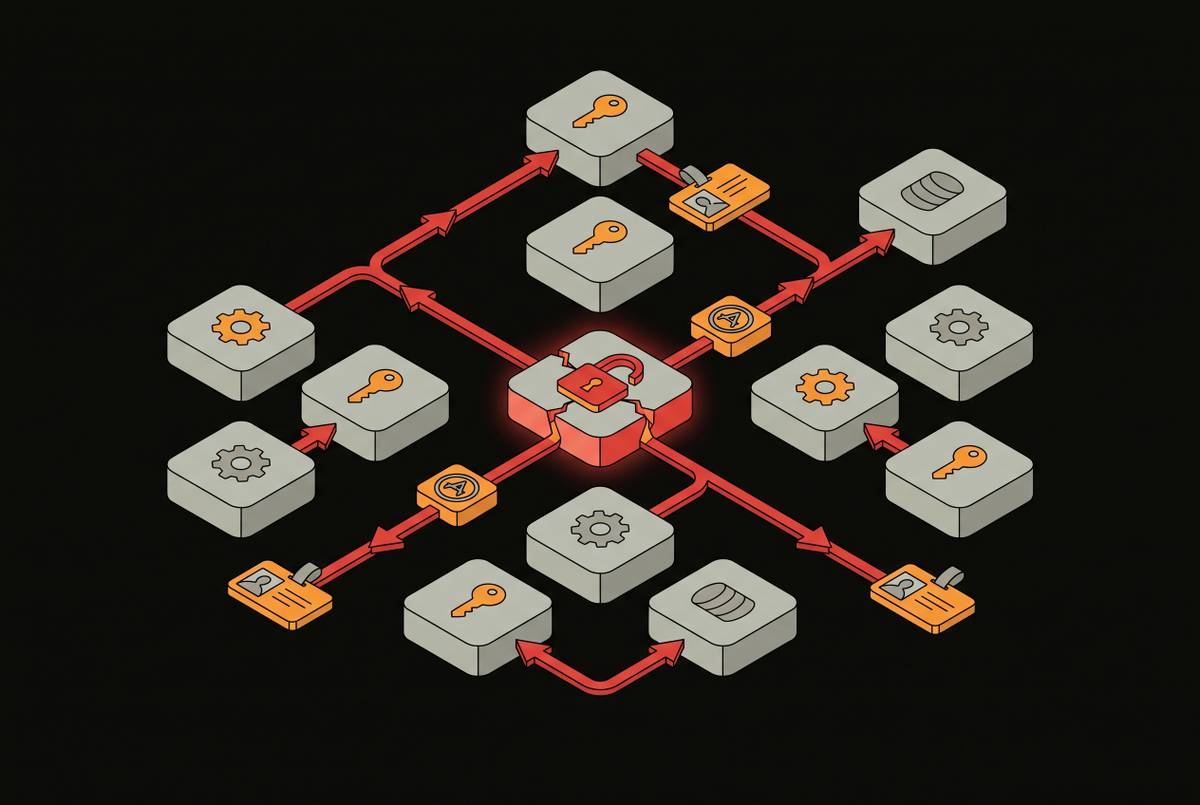
An engineering finding should start with why the vulnerability exists. Root cause gives the developer a basis for a durable fix, while a working proof-of-concept or reproduction path makes the finding verifiable. The next part should explain exploitability in the affected environment, including internet reachability, authentication requirements, and links to other findings. A low or medium issue can become urgent if it begins a chain leading to secrets, execution, or lateral movement. An isolated score hides that relationship.
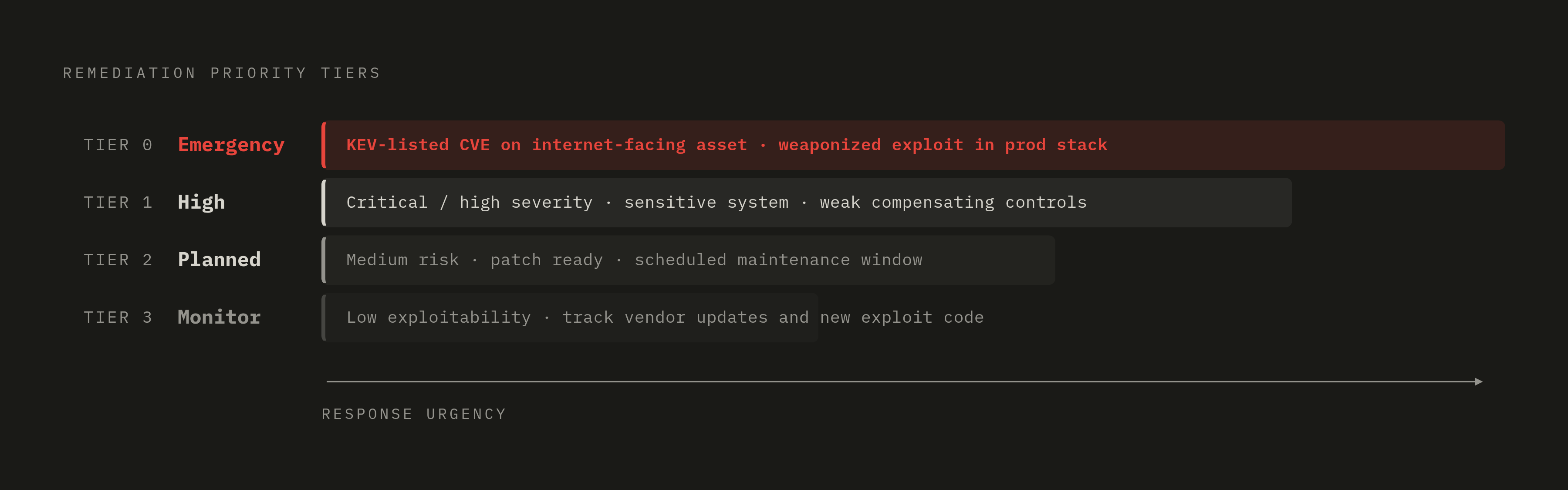
A tiered queue turns this context into a practical order of work. Teams can adapt the labels to their environment while keeping distinct tiers that determine the order of work. Tier 0 / emergency covers KEV-listed CVEs on internet-facing assets or public weaponized exploits targeting the production stack. Tier 1 / high is for critical or high-severity issues on sensitive systems where exploitation could happen and compensating controls are weak. Tier 2 / planned is for medium-risk issues that have patches ready for tested maintenance windows, while Tier 3 / monitor is for issues less likely to be exploited right away and keeps track of vendor updates and new exploit code. Deadlines should follow asset-specific exposure, so the same CVE can occupy different tiers on different assets.
An SSRF finding in a cloud-hosted SaaS product illustrates why this structure matters. If it could expose AWS credentials and lead to infrastructure takeover, the engineering account needs to show the reproduction path and the escalation potential. Remediation guidance should address the demonstrated problem and state the specific condition that would count as a passing retest. Without that condition, the work of making the fix can become split off from the work of proving it works.
What executives need from a vulnerability finding to make a resource decision
An executive update has a different starting point, namely what could happen to the business. A board member weighs security risk against hiring, product, legal, marketing, and other uses of capital. A “greatest hits of scary numbers” presentation does not fit that decision. Raw CVE lists, CVSS color badges, and counts of critical findings can produce a board that nods, asks one polite question, and moves on. Nothing in that exchange establishes what should be funded or changed.
The useful structure is direct. Begin with one to two sentences on the realistic worst case if the exposure is exploited, then explain who and what it touches. That scope might include customer data, production uptime, a regulated process, or a partner integration. The next part covers what has already been done and what is needed from the executive, whether that is budget, a policy decision, or nothing at all. CVE lists, raw scores, and scanner output belong in the appendix as evidence that backs up the report.
The SSRF finding therefore needs a different account for a CFO. Potential exposure of AWS credentials and infrastructure takeover can mean breach notification, a customer trust event, and a compliance incident even with a medium CVSS score. This is not spin, because the business consequence follows from the affected asset and the demonstrated attack path. A flaw on a system holding customer payment data or PHI carries consequences that the same score on an internal developer tool does not. Findings with high EPSS, KEV confirmation, and critical assets need the most attention, and work put off on purpose needs a short account of why the risk left over is acceptable and has limits.
How to structure a pen test report that produces both outputs without doubling the work
The report needs an information hierarchy that serves both outputs from one investigation. Put the executive summary first, covering business impact, exposure scope, overall risk posture, and the decision needed. It should be readable in five minutes and clear enough to withstand follow-up questions without a technical translator. Follow it with one engineering entry per vulnerability, containing root cause, reproduction steps, asset-specific exploitability, remediation guidance, and retest criteria. Place CVSS vectors, raw scanner output, and full CVE lists in the appendix.
Each finding should also have a header that connects the two levels. Include its severity tier, affected asset and business function, a plain-language consequence, exploitability signals, remediation tier, and target window. The engineer can then read the full finding, while the executive can understand the consequence without working through the exploit detail. When findings form a chain, show how they fit together so readers can see the links. Two medium-severity findings that together allow privilege escalation belong in the critical tier of the executive summary even if neither reaches that tier on its own.
This structure only works if the underlying evidence can support the translation. Findings need working exploits, because a possible or suspected vulnerability cannot honestly be presented as confirmed business exposure. Proven exploitation gives the engineer something to reproduce and gives the executive a clear basis for the risk decision. Whitebox access to source code, cloud configurations, and documentation lets testers map attack paths beyond those visible from the perimeter. Human expert review adds judgment about exploit chains and business context, as well as review of findings that will go to auditors and customers.
Where severity communication breaks down in practice, and how to catch it before it causes damage
Even a well-structured report can fail in the readout. A meeting that takes both audiences through the same deck leaves them to work out once again what the evidence means for them. Engineers wait through talk of business impact, executives wait through exploit details, and neither discussion has a clear goal. Separate the executive briefing from the engineering handoff even when both use the same report.
Another familiar pattern is severity inflation. Labeling everything critical may seem like a safe way to convey urgency, but it removes the distinction that makes triage possible. Engineers can no longer defend the order of work in a queue, and executives must either treat every finding as a budget emergency or stop trusting the labels. Calibration needs EPSS, KEV status, asset criticality, and reachability. A high-severity issue on an internet-facing system may still need attention before a critical issue on an isolated internal tool.
The quieter failure happens after a fix is marked complete. The engineer moves to the next sprint, the executive sees a remediated status, and a fix that fails or is misconfigured can leave the flaw open. Retesting closes that gap by checking whether remediation worked and whether it introduced a regression. The status report should distinguish “remediated and verified” from “remediated, pending retest” because those are different risk states.
Turning the severity translation into a repeatable process, not a one-time report
A pen test report describes a point in time, but the environment does not stop changing when the report is delivered. The assessment leaves out vulnerabilities that appear afterward, and changes in business context can change which existing findings need work first. Continuous pull-request scanning extends the signal into development, giving engineers feedback when a change is introduced and the context for fixing it is freshest. Engineers need to act on new findings, while executives need an account of how business exposure has changed.
A recurring executive risk report makes those changes legible. A trend line showing total exposure across reporting periods tells a board whether the direction is improving in a way that a snapshot of open findings cannot. Keeping the same structure, severity tiers, and business-impact framing gives readers a familiar report in which to track change each quarter. Keeping it the same builds the trust needed to talk about spending on security in the same terms as other business spending.
Preserve the evidence behind each priority in a durable record of the inputs, their sources, and the date they were captured so that the reason for a tier assignment remains clear. That record makes a deferral a documented policy decision rather than a forgotten exception, and it supports scrutiny from auditors and cyber insurers. Organizations that build this translation into their routine get more from every test, move faster on remediation, and enter audits with a defensible account of what was fixed first and why. Good severity communication leaves engineers with verified fixes and executives with a clear view of the risk that remains.